The third volume of Sumption's brilliant history of the Hundred Years War has finally appeared, almost twenty years after the first. It covers thirty years, 1369-1399, a period which saw a weariness from the war arising in both France and England, and neither side being wholly successful in their endeavours (France doing rather better in this respect, undoing many of the concessions which were made to Edward III following victories in the earlier part of the century). The low key nature of the fighting is one of the reasons for this impression of weariness; the French leaders had decided that the lesson to be had from battles like Crecy and Poitiers was that defeats could best be avoided by refusing to fight large scale engagements.
It was also a period when experienced kings of England and France were replaced by teenagers (Charles VI and Richard II) or became incapable of governing (Edward III and Charles VI), leading up to Henry Bolingbroke's deposition of Richard II at the end of the book. The only really dynamic aspect is that the war spread to other nations, involving Scotland, Portugal, Flanders, Castile and the Papacy, during this period.
The great virtues of Divided Houses are of course shared with the first two volumes. The detailed knowledge of sources both well known and obscure continues, with the best known for this time being Froissart's entertaining chronicles, which were also a source used by Shakespeare for his history plays. This is combined with accessible writing which is not noticeably partisan, unlike most of the more populist histories of the period I have seen, in English or French - the school books which dealt with the Middle Ages in the school I went to described the whole war in terms of the fortunes of the English, for example. The second volume, Trial By Fire, did get a bit bogged down in the tedious details of the small scale but viciously destructive fighting of the "routiers", mercenary captains who doubled as bandits: the activities of almost any single one are representative of the group as a whole. Here, the nature of the war in these decades means that the focus is more on the courtly politics in Paris and London (with side glances to the important centres of the other states involved), and this makes it more interesting to read.
The Hundred Years War was a pivotal period in the history of Western Europe, being highly influential in the development of the early modern states of England and France in particular. In this thirty year period, the change which is most noticeable is the way that the military fitted into the rest of society, a change important enough to receive a special overview chapter interrupting the main narrative thread. On the one hand there were technological changes following the introduction of gunpowder to warfare which would lead to the evolution of new strategy and tactics (eventually making both the castle and armoured knight obsolete in their fourteenth century form and function). The other development was the rise of the man at arms, who became a part of a class of professional soldiers as opposed to the former knights fighting from feudal obligation and often had quite humble origins (to the extent that it was not infrequent for nobles to refuse to be commanded by even the most famous, men like Chandos and Knollys).
Apart from the broad sweep of the development of medieval warfare, the main theme I saw in Divided Houses was just how difficult war was for medieval states, even though it was an exceptionally aggressive militaristic society, where warfare was glorified as the main occupation of most gently born men. Problems with finance, communications, logistics, and (often) poor generalship all made military success that much harder to achieve. When individuals trained in fighting from almost as soon as they could walk perform so badly, it is fairly clear that something is wrong with the training; my guess is that the emphasis was more on individual prowess in skills such as horse riding and hand to hand combat and honourable conduct than on more menial aspects of warfare such as strategy and logistics (itself admittedly made really difficult by the lack of transport infrastructure). And yet, if you can't get close enough to the enemy to engage them, the personal skills are pretty much useless.
Divided Houses details such débâcles as assembling an army to cross the Channel, only to fail to bring together enough ships to transport them before the period the soldiers were contracted for ran out. Armies were dispatched to meet an enemy force which was somewhere else - often a problem caused by the weeks it could take for accurate news of the current situation to travel between France and England. Campaign lengths were drastically underestimated, with the result that many soldiers had no pay after the first installment; a recipe for rebellion and pillage of local communities (sometimes even supposedly friendly ones). It was hardly surprising that it became harder and harder for the English kings in particular to persuade Parliament to grant the special taxes needed to fund a campaign. (It was easier in France, because most of the fighting happened there, which was a huge persuasive force in itself.) Of course, military incompetence is not restricted to any one period, and some wars (the First World War, or the Crimean War, for example) are notorious for it. So maybe the nobles of the fourteenth century were not surprisingly bad at warfare...
Another excellent volume in what must be among the largest medieval history projects ever undertaken. Another two or three volumes to go - but hopefully not another twenty years! My rating: 9/10.
Edition: University of Pennsylvania Press, 2011
Review number: 1437
Wednesday, 25 January 2012
Friday, 16 December 2011
John Wyndham: The Trouble with Lichen (1960)
John Wyndham's most famous books, The Day of the Triffids and The Midwich Cuckoos (filmed as Village of the Damned) are fairly serious stories of disasters, a theme also followed in The Kraken Wakes. The Trouble with Lichen, a later novel, is not quite in the same line, being an examination of the negative social consequences of a scientific discovery which initially seems to be a great boon to the human race. There is also a fair amount of arch and faintly satirical humour, more apparent here than in the earlier novels (even if touches of it can be discerned).
The central characters of The Trouble with Lichen are two biochemists, newly graduated Diana Brackley and the head of the research company at which she finds work, Francis Saxover. While working on a collection of lichen samples from an expedition to the Far East, Diana serendipitously discovers that one of the samples prevents milk from turning, in a narrative directly lifted from the story of Alexander Fleming's discovery of penicillin. She and Francis work on this independently, and discover that the lichen does not in fact contain the expected antibiotic agent, but instead acts to slow down the aging process, acting well enough to give a human being a life expectancy of maybe 200 years.
The problems, when they think them through, turn out to be many and complex. Firstly, the lichen is only found in one small area, so the supply is extremely limited, only enough to treat around a thousand people. Then there are the social issues: what happens when there is no "natural wastage" to speak of, so that two hundred years of active life will be spent in a job which is a dead end, as the senior people will effectively never retire? Or when there is no chance of inheritance, or when the world becomes overcrowded?
Some of these problems are much more in the air than they were in the early sixties, as populations age (especially in the West) and the number of people in the world reaches seven billion (from about three billion when the The Trouble with Lichen was published). As a science fictional exploration of the issues, it is as relevant now as it was in 1960, if not more so. Many countries are reacting to these problems now - by redefining what retirement means and when it starts, for example. But in The Trouble with Lichen this is emphasised rather less than some of the other issues, and it is the over-arching theme of the double-edged nature of scientific and technical advances which really resonates today, in the age of global warming.
Wyndham starts with a prologue describing Diana's funeral, so the reader knows that the novel will not all be cheerful, but he ends on a positive note, as his novels usually do. Like many science fiction writers of his generation, he seems to have been convinced that human ingenuity will be able to solve any problem, even ones which have been caused through science and technology. As in, say, The Day of the Triffids, the upbeat nature of the ending is dependent on hard work over many years, and Wyndham is unable or unwilling to suggest solutions to many of the problems he raises. They are hard issues, so this is not particularly surprising; nor is it necessarily a bad thing, as ideas produced by science fiction writers over fifty years ago are quite likely to seem naive in 2011, no matter how seriously intended at the time.
Of Wyndham's novels, this is the only one which I can recall as having a major female character who is not basically a wife and companion to the man who is the main centre of attention. This is probably more because the nature of the discovery lends itself to the idea of the use of the beauty industry to exploit but at the same time hide the discovery of the properties of the lichen than from any conversion to feminism by the author. After all, the campaign she mounts after the lichen becomes public knowledge is based on the use of her clients as the wives of important figures, rather than on any importance they might hold in their own right. The UK in 2011 may still have a male dominated establishment (just look at the Cabinet, or the board of any large bank), but I think that today's reader would probably expect some at least of these women to have important careers of their own, rather than having no role other than that of wife and mother.
Old fashioned, but still in many ways relevant; well written with touches of humour, The Trouble with Lichen is an excellent novel which deserves to be as well known as Wyndham's most famous works - 8/10.
Edition: Penguin, 1963
Review number: 1436
Saturday, 3 December 2011
Ed Rayner and Ron Stapley Debunking History: 152 Popular Myths Exploded (2002)
On the surface, this should be a fascinating book for amateurs interested in history, looking at a large number of historical controversies and misrepresentations and deciding how they could, or should, be resolved. It sounds as though it is intended to be a historical equivalent of John Sutherland's excellent series of books about conundrums in literature, which have titles like Where Was Rebecca Shot?. Rayner and Stapley are in a similarly authoritative position in their subject to Sutherland's in literary criticism, so, like him, they ought to know what they are talking about.
In practice, though, much of the content fails to live up to the title's billing, in several different ways. Firstly, the scope of the "history" covered is very much modern, starting with the American Revolution and ending with the question of the existence of weapons of mass destruction in Iraq, with a particular focus on the United States and on the Second World War. This is not unreasonable, though, as it will be difficult to discover the truth about controversies further back in the past, before the bureaucratic and obsessively documenting modern state really got going. Where medieval political documents are violently biased on many questions (depending quite often whether the writer was a churchman or not), it is likely to be virtually impossible to establish the truth of any controversy such as the impact of the Norman Conquest on the English peasantry. So it is an understandable restriction to use to decide which material can be usefully covered, but it doesn't justify the title.
And, too, few of the articles can be categorised as "popular myths exploded"; a more accurate description would be "interesting questions dismissed in a cavalier fashion without proper discussion". I suspect that there will be few readers who already have an opinion on even 50% of the issues discussed in the book, making popular a misnomer (does the average person-interested-in-history care whether the Speenhamland System should really be considered a system or not?).
Almost all of their discussions are excessively brief, some just one or two paragraphs in length, which hardly gives enough space to describe the issue and declare what the authors' opinions about it are, without giving much supporting evidence. It is no surprise that this means that the discussions frequently come over as glib and apparently partisan. Many of the 152 items could have (and often have had) whole books written about them - from the incompetence or otherwise of First World War generals to the final verdict on Nixon's presidency; to attempt to summarise the causes and the nature of the Chinese Cultural Revolution in just two pages is more arrogant than useful. The brevity makes the discussions more like dogmatic rhetoric, surely not very satisfying to the type of reader likely to pick up this book. In some cases, the initial description of the issue pre-supposes or states the conclusion which will be reached - neither very honest nor what would be expected of authorities in the field. It is not very interesting to be presented with an interesting conundrum, only to be told that the expected viewpoint is wrong (or right) without any real hint as to why that might be so.
The short essays are variable in quality too. Despite the authors' years of experience, some read as though they were written by a poor A-level student with access to Wikipedia and a short attention span. The topics covered are interesting, and that keeps the reader going, but anyone with a real interest in history would be better advised to look out more detailed coverage of the topics they find most fascinating. Comparison with John Sutherland's discussions which are mostly about 10 pages in length or so shows how much better more room makes the discussions. The best part of this book is the five page bibliography at the back, but even that is really just a list of fairly general books on the major subject areas covered by the 152 articles. Even there, though, I would have preferred a book or two pointed to from every article, even if that required a fair amount of repetition, as the general books listed at the back will be unlikely to cover all the relevant questions in any detail.
A serious issue is shown up by the way that, without even seriously trying, I picked up factual errors or misrepresentations. On the question of whether Marconi himself invented one of the key components of a radio or stole someone else's design, the Proceedings of the Royal Society (in which a design almost identical to Marconi's own had appeared a few years earlier), is described as "obscure"; while not as prestigious as the Philosophical Transactions, it is hard to see how any publication of the Royal Society can be considered obscure. This may be a matter of detail, but it is important to their argument for exonerating Marconi, who I suspect had read the article but did not consciously remember it when he was working on his prototype radio equipment.
The best chapters as far as I was concerned were the ones I knew least about already, such as the one on British influence on the formation of the Monroe doctrine by the United States government. I suspect that this is really a reflection of the superficiality of most of the coverage, as this is more noticeable to a reader in those topics which they already know about. Best, to me, then, were the articles about American history, of which there are a surprisingly large number for a book publishd in the United Kingdom. The coverage of World War II, a topic which I know better, is also pretty good, though more expected in a country where public library's history sections seem to be over half concerned with the six years 1939-1945.
Basically, I feel that I wasted my time in reading Debuking History, which I felt was pretty much the reference book equivalent of sitting down to watch The Phantom Menace (I never got to the end of Attack of the Clones and didn't bother even starting the third film). My rating - 3/10.
Edition: Sutton Publishing, 2006
Review number: 1435
Tuesday, 8 November 2011
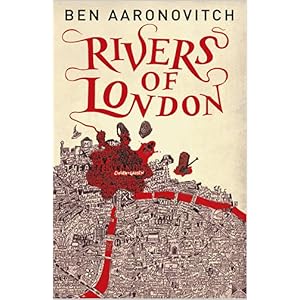
Ben Aaronovitch: Rivers of London (2011)
Rivers of London is a police procedural with a difference: Peter Grant is a trainee PC in the Metropolitan Police who discovers that he can see ghosts, and is immediately seconded to a tiny division of the force (tiny, as in - Peter brings the staff total up to two) which deals with crimes which have a supernatural element.
The supernatural unit police story has of course been done before, but not (as far as I know) with so much attention to the minutiae of police work. This juxtaposition of the supernatural and mundane is of course a source of humour, and Rivers of London is very funny in places. It reminded my strongly of Charles Stross' Laundry series, set in the Secret Service rather than the Met, combined with ideas about London mythology similar to those embodied in Neverwhere.
Aside from the narrative thread dealing with Peter's experiences of the early stages of becoming an apprentice wizard, there are two main parts to the crime story. One is a series of apparently senseless, bizarre and very violent murders, the first in Covent Garden being the occasion for Peter's discovery that he can see ghosts when a witness he starts to talk to turns out to be one. The more interesting idea is a territorial dispute between the spirits Father Thames and Mother Thames, the former of whom is not happy about the end of his territory coming at Teddington Lock (where the Thames starts being tidal); Mother Thames covers the part of the river through the city to the estuary and the mouth of the river.
Aaronovitch has been a writer for some time: he wrote one of the serials which made up the original Doctor Who, back in the eighties. So it is no surprise that Rivers of London is well constructed. If you stop to think, some of the details of the killings are rather nasty (enough to make this not a book for the squeamish), but the plot moves forwards fast enough that most readers will not dwell on the unpleasantness.
Enjoyable if not hugely original, well written and very funny. I'm definitely going to look out for the sequel, Moon Over Soho. My rating: 7/10.
Edition: Gollancz, 2011
Review number: 1434
The supernatural unit police story has of course been done before, but not (as far as I know) with so much attention to the minutiae of police work. This juxtaposition of the supernatural and mundane is of course a source of humour, and Rivers of London is very funny in places. It reminded my strongly of Charles Stross' Laundry series, set in the Secret Service rather than the Met, combined with ideas about London mythology similar to those embodied in Neverwhere.
Aside from the narrative thread dealing with Peter's experiences of the early stages of becoming an apprentice wizard, there are two main parts to the crime story. One is a series of apparently senseless, bizarre and very violent murders, the first in Covent Garden being the occasion for Peter's discovery that he can see ghosts when a witness he starts to talk to turns out to be one. The more interesting idea is a territorial dispute between the spirits Father Thames and Mother Thames, the former of whom is not happy about the end of his territory coming at Teddington Lock (where the Thames starts being tidal); Mother Thames covers the part of the river through the city to the estuary and the mouth of the river.
Aaronovitch has been a writer for some time: he wrote one of the serials which made up the original Doctor Who, back in the eighties. So it is no surprise that Rivers of London is well constructed. If you stop to think, some of the details of the killings are rather nasty (enough to make this not a book for the squeamish), but the plot moves forwards fast enough that most readers will not dwell on the unpleasantness.
Enjoyable if not hugely original, well written and very funny. I'm definitely going to look out for the sequel, Moon Over Soho. My rating: 7/10.
Edition: Gollancz, 2011
Review number: 1434
Monday, 31 October 2011
Lev Grossman: The Magicians (2009)
Gifted Brooklyn teenager Quentin is about to go to Princeton when he is suddenly taken to a completely different college, named Brakebills, in the woods of upstate New York near West Point. There, after completing a series of baffling tests, he is offered a place to learn magic. The Magicians, first in a series from Lev Grossman, is the story of the years he spends there as a student.
The basic plot, when summarised as baldly as this, makes The Magicians sound like a rewrite of Harry Potter aimed at an adult (American) market. In fact, it seemed to me to have an atmosphere more akin to Donna Tartt's Secret History, a likeness in part fostered by the New England collegiate setting. In fact, all three (Grossman, Rowling, and Tartt) have an important theme in common, in that death and obsession with death plays a central role in all three stories. But Harry Potter, even though he has his complications, is a much more straightforwardly heroic character than either Quentin (here) or Richard (in the Secret History). Both of them are more focused on their insecurities than Rowling's character is.
Embedded in the story is a (fictional) series of children's fantasy novels, a formative experience shared by most of the students at Brakebills. Quentin, as narrator, constantly references the world of Fillory. His affection for the books, which he has continued to re-read, is obvious. He is, as a teenager, sometimes disparaging about their more childish elements. For example, he feels it is silly that good characters never die in a final manner, always appearing at the end of each novel in the series alive and well again. (This particular observation, in a book I read soon after re-reading the Harry Potter series, may seem like a bit of a dig at Rowling's ending by Grossman, but it is actually common in more feel-good fantasy fiction, to the extent that the return of dead characters was used as a running satirical joke in Buffy the Vampire Slayer back in the late 1990s.)
T.H. White is also a direct influence on The Magicians. Part of the teaching at Brakebills sees students transformed into geese for a season, just as happens to Arthur in The Book of Merlyn and in the later, better known version of this passage in The Sword and the Stone. They fly south all the way to the Antarctic, no doubt (as Quentin notes) confusing and exciting birdwatchers (if, of course, the students are visible to non-magicians during the trip). The time in the Antarctic is basically a retreat to concentrate on a regime beyond what would have been possible to undertake in the school in New England: no talking for months, days of extremely hard work to "internalise" the complicated rules which govern the use of magic on Grossman's world. As equally obvious a source is C.S. Lewis' Narnia stories: the Neitherlands come straight from The Magician's Nephew.
The way that magic works in The Magicians makes it among the hardest to use of the frameworks devised by fantasy authors. To perform a spell, you need to have innate talent, to be able to speak an incantation in an obscure and usually dead language, to move the fingers in a bone-cracking cantrip, and to modify the incantation and cantrip to match any of a whole host of circumstances, such as date, location, or the mood of the spell caster. It is hardly surprising that Brakebills seeks out only twenty of the brightest and magically talented school leavers in the States each year, and that they have to spend five years of university level study to become proficient.
Like Tartt, Grossman really captures the way that being a student is likely to be a unique time in a person's life, even if Brakebills is more like a school than any real life college I know about: they even have a uniform. Less restrictive and timetabled than most schools or workplaces, yet still an intense experience, a university course can truly act as the focal point for many students' lives, catching them just as their formative years and adolescence come to an end. Friendships can be close and enduring, pastimes can become hobbies pursued for the rest of your life. Brakebills is small, but particularly intense, which does not necessarily mean enjoyable, and Quentin hates parts of his life there. By getting there, Quentin has fulfilled his innermost fantasy (being an apprentice wizard), but remains unsatisfied.
The Magicians is a meticulously thought out fantasy novel. But it does drag in places; I was often tempted to skip a few pages. The mechanics of the plot are, in the end, less well contrived than the depiction of atmosphere, the world building, and the characters. For this reason, my rating is only 6/10.
Review number: 1433
Labels:
fantasy,
fiction,
Lev Grossman,
Magician series
Sunday, 16 October 2011
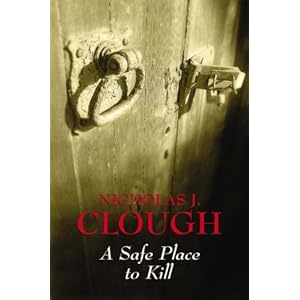
Nicholas J. Clough: A Safe Place to Kill (2008)
In a village church in the Yorkshire Dales, the body of one of the church wardens is found stabbed, with wounds to the hands and feet. Murder is not the most common crime in the district, and Inspator Daykin, assigned to the investigation, is under close scrutiny from his superior officers. He is also assigned a new sergeant who happens to be the son of the Assistant Chief Commissioner.The Yorkshire Dales are among the most beautiful parts of England, but this is not one of those detective novels which hints to TV production companies that a series would have a tourism-friendly background which would help them sell it abroad. The background is mainly used to provoke a sense of emptiness and isolation, and the book could be set in any sufficiently rural part of England, barring occasional mentions of people going for walks on the moor or travelling to Leeds. What in fact makes this a slightly unusual crime novel is that it is at least as concerned with police force office politics and character interaction as it is with the investigation.
The book itself is rather shoddily produced, with poor proof-reading in particular. It is also missing most of the marketing frills of modern publishing: no endorsements from other crime writers, no quotations from reviews. Even the author biography is just a single, uninformative line: "Nicholas J. Clough lives in Bath." It does at least have a colour picture on the cover. While this might be a refreshing change from the over the top hype typical of twenty-first century marketing, it does suggest that Constable expected A Safe Place to Kill to sink without trace. It may be old fashioned, but it is better than many novels given the familiar overkill treatment. Clough has written more, but not (I gather) involving Daykin, which is a pity: he is a detective I would be happy to see more.
My rating: 8/10.
Edition: Constable, 2008
Review number: 1432
Monday, 3 October 2011
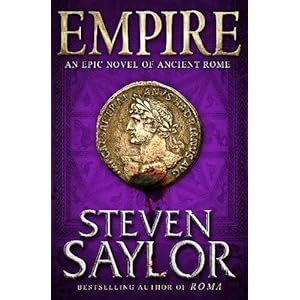
Steven Saylor: Empire (2010)

Why, when this is a sequel to Roma, is Empire given an English language title, rather than using, say, Imperium?
Empire follows on from the earlier novel, with a small gap (less than that between some of the individual chapters which make up the story). It describes the story of Rome from AD 14 to AD 141 - the years in which the Roman Empire became an established institution. Once again, the viewpoint characters are the various members of the (fictional) Pinarius family which was established at the beginning of Rome's history, according to Roma.
As Saylor points out in the afterword, this is one of the best documented periods of Roman history, but the surviving histories concentrate (with varying degrees of accuracy and/or bias) on the colourful figures of the emperors, who include some of the best and some of the most monstrous ruler of any nation. Saylor complains that contemporary historians were excessively emperor-centred, but then goes on to do the same thing himself: the novel is really about how successive generations of the Pinarii interacted with the emperors of their day, becoming intimately involved with most of the emperors from Tiberius to Hadrian. So Empire, too, centres on the emperors, and, to be honest, this does not work too well. I ended up feeling that it would be more fun to work through the histories for myself, or read some novels which concentrate on just part of the period, such as Robert Graves' I, Claudius. (Graves is a clear and acknowledged influence on Saylor's historical fiction.) The episodic nature of the story, as the focus moves from generation to generation, does not make a gripping novel (I felt much the same about Roma). Saylor is to my mind much better with the more focused detective stories he has written, whether set in ancient Rome or not.
The main lesson from the history as presented here is just how lucky you need to be to survive once you have attracted the attention of a Caligula, Nero or Domitian. Indeed, it becomes implausible that the family continues to exist after close contact with so many emperors.
It's worth reading, if you're vaguely interested in the history, but it's better to read the originals in a good translation - and they are generally available free online. My rating - 5/10.
Edition: Corsair, 2011
Review number: 1431
Labels:
ancient Rome,
fiction,
historical fiction,
Steven Saylor
Subscribe to:
Posts (Atom)