Showing posts with label thriller. Show all posts

Tuesday, 7 May 2019

Leslie Charteris: Salvage for the Saint (1983)

Edition: Thomas & Mercer, 2014
Review number: 1519

After almost forty years, this is the final Saint book which I am reading for the first time, as well as being the last one published (aside from the Burl Barer contributions, neither of which I've been able to like enough to read right through). Salvage for the Saint was adapted  by Peter Bloxsom from a double episode of The Return of the Saint TV series written by John Kruse, the two of them being frequent choices by Leslie Charteris to work with turning TV scripts into books.

The story starts at a motorboat race on the Isle of Wight, in which Simon Templar is unable to save fellow competitor Charles Tatenor from a fatal accident - or possibly from murder.  He also meets the dead man's beautiful widow Arabella. The action moves to the south of France (one of the favourite European locations of Saint stories), Simon to investigate the murder and Arabella to sell a yacht, as her husband unexpectedly left nothing but it and debts.

In places, Salvage for the Saint has a wistful atmosphere which is appropriate to the last novel in such a series, and includes a number of melancholy references to older Saint stories. This is far more subtle than in the Burl Barer-penned Capture the Saint, which is full of contrived attempts to introduce names of older stories into the narrative - a piece of silliness which becomes infuriating after a few pages. It was Leslie Charteris' decision to stop at this point, and these touches are perhaps pointers to this being the final Saint story.

Diving is an crucial part of Salvage for the Saint, as it was to the early novel Saint Overboard, published almost fifty years earlier. In both novels, the diving technology is important to the plot, and it is hugely different - heavy suits with air hoses to the surface are now replaced by compact scuba tanks; to read both is to have a glimpse of how much had changed during the time that Leslie Charteris was writing.

All in all, this is a worthy conclusion to the Saint saga, though it doesn't match up to the quality of the early stories. My rating: 7/10.


Sunday, 14 April 2019

Leslie Charteris: Count on the Saint (1980)

Edition: Coronet, 1980
Review number: 1518

According to the saint.org website, this is by uncredited (as far as I can see) writers Graham Weaver and Donne Avenell - the same as the previous Saint book, The Saint and the Templar Treasure. Like many of the books which originated from the TV Saint adventures, Count on the Saint contains two independent stories, The Pastor's Problem and The Unsaintly Santa.

As soon as I started reading the first story, it felt as though I was back in the heyday of the Saint. This is a big contrast to The Saint and the Templar Treasure, which is a competent thriller but which is not convincing as part of the series. The setup is very Saintly indeed, as Simon Templar steals a chalice belonging to a church in order sell it to help the pastor raise money for the parish; the chalice can't be sold legitimately to raise money directly. (The chalice is meant to be real; the very obviously fake chalice shown on the cover of this edition does the story no favours.)

In his long history, Simon Templar points out several times that he is not a detective, usually before solving a mystery. The Unsaintly Santa is definitely a mystery, and Simon is definitely detecting. Set in Cambridge just before Christmas, the puzzle is to work out the identity of a killer dressed as Santa. Unlike some of the earlier attempts at detecting (where Simon's method is basically to accuse each person until the right one is exposed), this works quite well as a puzzle - but there very little need for it to be a Saint story.

For the reader, this is one of the best of the late Saint books. My rating: 8/10.

Friday, 29 March 2019

Leslie Charteris: The Saint and the Templar Treasure (1978)

Edition: Coronet, 1978
Review number: 1517

Another late Saint novel, written by Donne Avenell and Graham Weaver in the days when Leslie Charteris was editing new entries in the series rather than writing them himself.

It feels like a somewhat trite idea that Simon Templar should become involved with the Knights Templar, but in fact the way it is handled is competent, if a little clichéd for a thriller setup - Simon gives a lift to a couple of young men heading for a French vineyard to work in the summer, and gets there to discover that someone has set the barn on fire. The vineyard is at a house which was originally one of the last Templar castles to remain in the hands of the knights after the suppression of the order by the French king in 1307, and suspected by some to hold the hidden Templar "missing" treasure (while more sober individuals suspect that the treasure never existed in the first place, and that the riches of the order were exaggerated).

While the book is satisfying as a thriller, it doesn't really read like a Saint book. It could almost be any late 1970s British thriller writer. The early Saint stories were unique, standing out from the crowd (even if they had obvious debts to Dornford Yates and Sapper), and Leslie Charteris was an expert at maintaining this specialness. It was partly that he made Simon Templar a genuinely charming character, rather than the direct man of action favoured by many other writers. That is really what is missing here; Simon Templar just isn't Simon Templar by 1978.

My rating: 6/10.

Tuesday, 19 March 2019

Leslie Charteris: The Saint in Trouble (1978)

Edition: Coronet Books, 1978
Review number: 1516

Another compilation of stories which originally were TV episodes of Return of the Saint, The Saint in Trouble comprises The Imprudent Professor (by Terence Feely) and The Red Sabbath (by John Kruse), both adapted from the TV scripts by Graham Weaver.

In the first story, Simon Templar is asked to look out for the safety of Professor Maclett by his daughter, in the glamorous setting of Cannes. Maclett is the centre of a lot of attention, being of interest to both British and Russian spies, and the story is a hectic series of encounters between the various parties involved and the Saint. Even if only ranked against the other TV adaptations, The Imprudent Professor is not a high quality story. It seems to be Saint-by-numbers - a location which would have been exotic in 1978, beautiful women, Saintly tricks, and Simon sorting everything out in the end.

The Red Sabbath is better. It follows on directly from The Imprudent Professor, as Simon disembarks in London from the plane he took in Cannes at the end of the first story, and is accosted by men who take him to talk to an Israeli intelligence officer. This leads to Simon hunting an Arab terrorist through London, a task he invests in personally. It is perhaps more typical of other thrillers of the second half of the seventies than of the Saint oeuvre, though the nature of the story reminds the reader that Arab terrorists are not new in fiction post 9/11.

Averaging out my ratings for the two stories, I would give The Saint in Trouble a solid 5/10.

Thursday, 27 December 2018

Leslie Charteris: The Saint and the People Importers (1971)

Edition: Thomas & Mercer, 2014
Review number: 1515

In recent years, the news has been full of refugees; immigration, legal and illegal, is seen as a problem by many. But people have been concerned about it for decades, and even centuries, and this is a novel about illegal immigration from the early seventies (the TV episodes that the novel was based on were aired in 1969 and the book came out in 1970).

This is not the first Saint novel to take on social and political issues, including pre-war attacks on the Nazis in Prelude for War (aka The Saint Plays With Fire). Many Saint stories have a moral content, as Simon Templar is almost always taking on the bad guys in order to help an innocent victim. Here, his activity is prompted by a newspaper report of the killing of one of the immigrants as a warning by the traffickers. However, there is no serious attempt to integrate any of the issues surrounding immigration into the story, the abuse of would-be immigrants by traffickers being only the motivation for a TV thriller. The eventual "solution" to the problem of the existence of a group of rescued immigrants seems crass and insensitive today. To be fair, the TV episode and this novel were not intended as any kind of serious exploration of the issue; the adventures of the Saint are about entertainment pure and simple. The nature of the MacGuffin in The People Importers is not really suitable for this treatment, and it shows.

Like many of the TV based stories, this is a much more straightforward thriller than the earlier Charteris stories. Although his introduction says that he added his own signature touches to each one, that is little in evidence here. One for Saint collectors only, really.

My rating: 6/10.


Wednesday, 6 May 2015

John le Carré: A Delicate Truth (2013)

Edition: Viking, 2013
Review number: 1498

It's a while since I last read a John le Carré novel, and I picked this up in the local library a little reluctantly, because I felt that his world was often too downbeat for me to enjoy reading his work as much as I felt I should - very well written, provocative, but depressing.

A Delicate Truth is the story of the aftermath of a secret and rather shady operation, a collaboration between British military and a US security firm, organised outside normal security services procedures by an ambitious government minister. The operation is described in the first section of the novel, and the fallout from it returns to haunt some of those involved through the rest of the book. The main character is Toby Bell, who was the minister's private secretary at the time of the mission and was excluded in a manner which made him suspicious. The focus is on Bell's attempt to understand what has happened and to act in accordance with his conscience, not in the way which sustains the cover up.

The ideas of the novel are clearly inspired by the Wikileaks saga and the cases of Bradley (now Chelsea) Manning and Edward Snowden. Several of le Carré's earlier novels, especially The Constant Gardener, The Mission Song, and A Most Wanted Man have done the same thing, but this is the first time where a UK setting has been used to give the novel more immediacy to what I would assume is the author's main audience, his compatriots.

Although the operation is not an official one, and the background is post-Cold War, I found A Delicate Truth reminiscent of le Carré's Smiley novels as a reading experience, more than it is of the recent works already mentioned. This is not the only reason; le Carré's spy fiction has often had matters of conscience and honour at its heart, and these themes play a large part here too. I did feel that this resemblance does make it clear that A Delicate Truth is overshadowed by the Smiley novels - not surprisingly: there is a reason why they are classics of the spy thriller genre.

A thoughtful novel, raising concerns about the actions taken against whistleblowers by those in authority. Though readable, it is a step down from le Carré at his peak. My rating: 7/10.

Friday, 29 August 2014

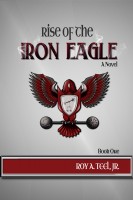
Roy A. Teel, Jr: Rise of the Iron Eagle (2014)

Edition: Narroway Press, 2014
Review number: 1487

Rise of the Iron Eagle is a thriller, first in a series, about vigilantism and serial killers. I was warned before I started it that was not for the faint-hearted, and it certainly is that. There are frequent scenes not for the squeamish, and, though I don't really mind that usually, there are lengthy descriptions of torture which I did find disturbing - sometimes gratuitously over the top. More on that later...

The first chapter introduces a character who initially appears to be going to be the the novel's principal viewpoint character, a retired alcoholic private detective, whose granddaughter is the latest victim of the Iron Eagle killer - only for him to be kidnapped and killed himself. This is an interesting opening, to say the least. But after this promising start, the story settles down into a more straightforward tale of the FBI hunt for the vigilante who targets serial killers.

Vigilantism is a popular theme in fiction, presumably because it plays into people's fantasies of besting those who have done them a perceived injustice. Few actually have the abilities needed to be a successful vigilante, of the solitary Iron Eagle type, anyway - able to find criminals as yet unknown to law enforcement, able to overpower and murder successful killers, and able to do this while taunting the FBI and remaining uncaught - like a rather dark comic book superhero. This is rather different from the types of vigilantism which seem to happen in the real world, which would include harassment of suspected paedophiles by groups of concerned citizens. The tragedy of vigilantism is of course the possibility of targeting someone innocent, either through mistaken identity or an incorrect assumption that the person attacked is indeed guilty of the offence. Of course, the police are not immune from this issue, as the Guildford Four would attest, but by carrying out their investigations in a system where there should be checks and balances, and where judicial punishment is separate from the search for the culprit, this is less likely to happen and more easily correctable. (I am not sure that the Guildford Four would agree with this sentence, but if they had been murdered by the police when they had become convinced of their guilt, they could not have been exonerated even 15 or more years later.) So there are two reasons not to go outside the system - you might be wrong, and you might not be good enough at it to survive attacking a murderer and getting away with it.

Rise of the Iron Eagle plays lip service to this, but I couldn't help but have the sneaking suspicion that the Iron Eagle was the real hero of the book, at least most of the way through. This included the feeling that I was meant to approve of the unpleasant torture the vigilante visited on his victims, in the name of retribution and obtaining a full confession, Confessions made under torture and undue pressure are, it should be noted, notoriously unreliable (see the Guildford Four again). This particular issue was not addressed at all; all the characters, law enforcement included, seemed to take the validity of the confessions as unquestionable. (The reader knows that they were accurate, because of other things mentioned which are not known to the police.) More moral ambiguity would have improved the literary quality of this thriller, as well as providing darkness which is not just derived from the extreme violence: this is why The Dark Knight Returns and The Watchmen were so much greater than the comic books around them when they appeared in the eighties. I was, to be honest, expecting this novel to be dark in a similar way to those comic books - morally ambiguous, gothic tales which have a serious point to make.

I have never watched the TV series Dexter, nor have I read any of the books. But the theme here of a serial killer who preys on serial killers is familiar from it even so, and I suspect there would be more similarities which I would notice if I was familiar with the series. There are points of some interest, and many readers of this type of fiction might enjoy it. But overall, I felt that Rise of the Iron Eagle was not to my taste, especially the way that the idea of vigilantism is treated. The tone of the violent scenes put me off, though they are clearly well written (there are a large number of different ways in which "x did something unpleasant to y and caused y a lot of pain" is expressed). Because of my personal dislike of the treatment, I feel I can only rate the novel at 5/10.

Tuesday, 2 July 2013

Wayne Williams and Darren Allan: I Know What You Did Last Supper (2013)

Edition: Piatkus, 2013
Review number: 1477

I initially hesitated about reviewing this novel when I was asked to do so, because of the subject matter, but decided that it is wrong to effectively condemn anything without experiencing at least part of it. I probably would not have picked it up, though, unless I'd been asked to review it (hence the introduction of a new tag for books submitted for review).


The basic premise of I Know What You Did Last Supper is that Judas Iscariot receives a threatening message after his betrayal of Jesus Christ, before his friends and family start being gruesomely murdered one by one. The title suggests an outrageously silly take on this, but that is not what the novel is: instead, it is a fairly standard thriller in terms of plot.(Others may find the way it is written funny, but I felt that the killings were really too gruesome for this.) To my mind, it has to succeed as a thriller before getting to the question of the content, which may well be offensive to some.

As a historical novel, it does rather come up short. There is little real atmosphere of first century Palestine, and many of the actions which happen are more or less transpositions of modern day actions to the period - when Judas goes out and buys a flashy black stallion with the money paid to him as the price of his betrayal, the transaction hardly differs from a purchase of a shiny black convertible in Los Angeles. There are events which don't really ring true, particularly in the portrayal of religion. For example, it seems unlikely that so many people would ignore the Sabbath at this time in Jerusalem. So, not convinced by the setting. I had the impression from somewhere that "Iscariot" is thought to be a nickname, from the Sicarii, a group of Jewish nationalists, not a surname in the sense that we use them, so that Judas' father is unlikely also to be known as Iscariot.

And as a thriller? I'm not entirely convinced here either.  The thriller plot, with Judas basically flailing around trying to work out who is killing people, is basic and unoriginal, though it does have a couple of interesting twists, which I will discuss as part of the religious content. The final revelation was, to me, long anticipated and unconvincing.

The Christian content seems, to at least a certain extent, designed to shock. Some of this is done at the expense of verisimilitude, as when, for example, Judas suspects that it is the resurrected Jesus who is using supernatural powers to kill those close to him as a punishment for his act of betrayal - not really likely in the sort of person that Jesus is otherwise portrayed to be in this novel as well as in the gospel narrative. Not validated by the quality of the treatment, the use of Christianity is just offensive for its own sake, which is the least excusable form of offensiveness. There are a couple of redeeming features. One - the one which is most important to me - is that the novel reminds its readers that the disciples portrayed in the Bible were people, even Judas. The other  is that the most interesting thing about Judas' character as depicted here is the motivation for his original betrayal, which is not considered important by the gospel writers, but which is something very important to modern readers of crime fiction. So Judas is given one, and it is because he wants to save his uncle from a vicious criminal boss who wants his gambling debts paid off.

In the end, the redeeming features were not enough for me to truly enjoy reading the novel. My rating - 3/10.

Thursday, 20 June 2013

Nick Harkaway: Angelmaker (2012)

Edition: William Heinemann, 2012
Review number: 1476

Harkaway's first book, The Gone-Away World, is one of my favourite new novels of the last few years, so I have been eagerly waiting to read his second, Angelmaker.

The central character, Joe Spork,  is a craftsman who works on clockwork mechanisms, deliberately following in the footsteps of his grandfather rather than his father, an East End gangster. But when he is asked to repair an enigmatic device, he draws the attention of a shady government agency as he races to prevent the use of a doomsday weapon.

There are, unsurprisingly, many similarities between Angelmaker and The Gone-Away World. The style is the same, the frenetic pop culture tropes are used as effectively. Here, the references include such things as Kim, sixties London gangsterism, a hidden London which most inhabitants never see (Neverwhere without the fantasy elements - including a market held near HMS Belfast), and so on. Like Angelmaker, it reminded me strongly of Thomas Pynchon, though perhaps in this case Vineland is a closer fit than Gravity's Rainbow. It's lighter, with more concentration on the humour, but is certainly no less enjoyable.

This type of wildly whimsical storytelling always appeals to me, but if it isn't your cup of tea, you are unlikely to enjoy Angelmakeras much as I did. And since the cleverness of the silly side to the book is such an important part of it, it's probably not worth picking up if that is so. But to those of us who do like this, Nick Harkaway's second novel is as much a treat as his first. My rating: 9/10.

Sunday, 16 December 2012

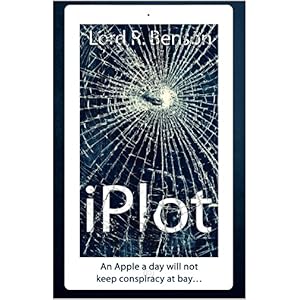
Lord R. Benson: iPlot (2012)

Edition: Marador, 2012
Review number: 1470

A simple but arresting idea sets off this thriller: a couple pick up the wrong iPad after an airport security check when travelling to Australia, and find that it is fill of files about terrorism, including copies of hate mail sent to the Australian Prime Minister Carla Moore. The documents are fairly swiftly erased, the iPad having a feature that makes it possible for the owner to delete documents on a lost device. When Carla Moore falls ill suddenly, they suspect that there might be a link between the event and this iPad, but, having nothing concrete to show the police, they need to investigate for themselves.

iPlot starts slowly, and I found the basic idea of the swapped iPads difficult to believe: surely it can't be the case that there is no security to stop unauthorised users accessing the content on an iPad without entering a password? I'd be surprised if there were no apps to add biometric authentication capabilities such as iris scanning to iPad authentication. I am not an iPad user, but the answer to both questions appears to be yes, from a quick search on google, though it seems to be possible to bypass iPad authentication; this is a list of biometric authentication apps. So the idea that it would be possible to pick another person's iPad and only realise it is not your own when you see it doesn't contain the film you planned to watch on your flight - especially as the iPad concerned contains seriously sensitive data. My doubts made it hard to accept the verisimilitude of the story from the beginning.

There were other flaws which did not help. There are some rather clunky passages of prose, including the second chapter, which consists of lengthy and dull extracts from the documents on the laptop, including information about the death of Alexander Litvinenko, which is likely to be fairly familiar to anyone who has followed the news over the last few years, at least in the UK. This material could have been better introduced, and there is no need for so much of it, just a few bits and pieces to establish the type of content which is stored in the iPad. Anyone who has watched shows like Spooks or Homeland will already have a pretty good idea of what these documents will be like, so it will feel like familiar territory which could be skipped to many readers. There is something of a tendency to over-explain the background throughout, especially as many of the topics involved (the iPads, the terrorist plotting, the science) are likely to be of interest and fairly well known to potential readers, who I suspect will be - I hesitate slightly to say - geeks like me, who will be drawn in by the iPad idea.

The characters are poorly drawn; they all seem to have the same personality, pretty much, and even their physical descriptions are similar in many cases - this is a world of good looking, intelligent, and basically nice people.

But there are good sides to iPlot too. The story builds to its climax well, and eventually the most cynical reader will be drawn in. In terms of the plotting, I would have liked to have seen more use made of the iPads after they set the plot in motion, but the finale of iPlot was good anyway. I liked the technological and scientific aspects of the novel, even if they were over-explained, but I wanted to enjoy iPlot as a whole more than I did. My rating - 6/10.

Friday, 17 February 2012

John le Carré: Our Kind of Traitor (2010)


Since 2000, John le Carré's novels have been rather downbeat, even by the standards of a writer not known for cheerfulness (The Constant Gardener, Absolute Friends, The Mission Song, and A Most Wanted Man). Our Kind of Traitor is much more of a pleasant read, with a rather arch tone shared with some of his earlier novels, The Russia House and The Tailor of Panama in particular coming to mind. The former also shares with this novel a plot in which innocent people are used as intermediaries in secret negotiations. Thus, the story is simple: Russian money launderer Dima wishes to give up the secrets he holds after the betrayal and murder of one of his closest friends by a Russian Mafia boss for whom they both worked, and chooses the British Secret Service as the recipient (asking for a place for his daughter at Roedean school in return).

Dima's chosen instrument for making contact with the British is Oxford English fellow Perry, who is holidaying on Antigua with his girlfriend Gina at the same time as the Russian, with whom he also shares an interest in tennis, which provides a convenient reason to meet up and become friendly. Most of the first part of the novel is taken up by Perry and Gina's debriefing, describing the initial tennis match and the introduction of Dima's proposal to the two of them. Both the description of these sessions and the questioning itself are arch in tone, occasionally to the point of becoming irritating rather than light and amusing. It sometimes reads as though Le Carré is parodying his earlier writing in this vein (in the novels mentioned above).

Myself, I feel that John le Carré peaked a long time ago.  His books from the last decade are still worth reading, but something of the spark has gone out of them, even though he still has something to say, finding new topics after the end of the Cold War. The change of tone makes Our Kind of Traitor more fun to read than, say, The Mission Song, but perhaps too its subject matter is less significant than Le Carré's righteous anger at the way that the poorer nations of the world continue to be exploited by the richer. For the best Le Carré experience, go back to Tinker Tailor Soldier Spy. My rating: 6/10.

Edition: Viking, 2010
Review number: 1450

Friday, 27 May 2011

E. Phillips Oppenheim: Last Train Out (1941)

Described in his heyday as "the Prince of Storytellers", the name of E. Phillips Oppenheim was familiar to me pretty much only from the back covers of the Leslie Charteris novels I own in these Hodder yellow jacket editions. When I saw this one - in a book case in the garden of a cottage in the Welsh mountains containing books for sale to support education charities working in Africa - I was keen to take the chance to make my acquaintance with the author. (I would never have thought of searching for it, though; this kind of serendipity is one major reason why physical second hand bookstores are such wonderful places.)

Published in 1941, Last Train Out must be one of the earliest thrillers to describe the build up to the Second World War. Its story is built around the escape of a Jewish banker from Vienna to Switzerland from before the annexation of Austria by Germany in March 1938 to just after the declaration of war on Germany by Britain in France in September 1939 following the German invasion of Poland.

The hero of Last Train Out, Charles Mildenhall, is an upper class British adventurer, working for the Foreign Office in a role somewhere between a diplomat and a troubleshooting spy. It is he, for example, who travels to Poland to assure the leaders there that Britain and France would indeed honour their treaty commitments and declare war if a German invasion takes place. While Oppenheim's novels are publicised on the back of those by Leslie Charteris, Mildenhall resembles the central characters in books by Dornford Yates more than he does the Saint. Apart from his class background, he is more likely to succeed the liberal use of cash than to be supremely useful in a fight with the bad guys. But there are qualities Mildenhall shares with Simon Templar. Both use intelligence to work their way through a problem while not being as cerebral as, say, Holmes or Poirot; both have a personal charm well portrayed by their respective writers; and both, as a result, have a large network of friends everywhere they go who can be counted on to provide aid as needed.

Despite the soubriquet bestowed on Oppenheim, I felt there were occasional infelicities in the storytelling in the Last Train. The most noticeable is the sudden jump from the eve of the Anschluss to the eve of the invasion of Poland, with Mildenhall's activities during these seventeen months described only later as he describes them to others. Oppenheim clearly wanted to keep most of the action in Vienna and not bring in characters and activities elsewhere in Europe, but it would have made the story flow better to follow his hero's actions chronologically.

Overall, though, the characters are good, the story is exciting (if a little slow compared to more modern thrillers), and Oppenheim carefully builds up the tension towards the final scenes as the last train out leaves for Switzerland. I was pleased to enjoy reading it, and will look out for more of Oppenheim's novels in the future. My rating - 8/10.


Edition: Hodder & Stoughton, 1952 (Buy from Amazon)
Review number: 1423

Saturday, 16 October 2010

Henry Porter: The Dying Light (2009)

Henry Porter's fifth novel is intended, so the author tells us in the afterword, to fulfil three purposes. It is obviously a thriller readable as a standalone story, but is additionally intended as a contrast to his previous novel Brandenburg and as something of a political call to arms. It is set in a near future Britain, where high-powered lawyer (and former spy) Kate Lockhart returns to the country after several years working in the States for college friend David Eyam's funeral. Eyam, was a civil servant involved in security at the highest levels, but he resigned and hid himself in a tiny town on the Welsh borders before making a sudden trip to South America to be killed in a terrorist bomb attack. Kate is told that she is Eyam's heir, completely unexpectedly; and when Eyam's lawyer is killed by a sniper driving down an English country lane and she discovers that child pornography has been planted on Eyam's computer to discredit him, she realises that she has inherited not just his possessions but a dangerous secret worth many deaths to those who wish to keep it hidden.

From this point on, The Dying Light is a political thriller with a conspiracy theory at its centre, set in a dystopian Britain in which every move is watched by the authorities. The development of the systems which allow this and the accompanying erosion of civil liberties are Porter's main concern.He mentions the way in that events he was describing as he wrote the novel turned out to be true as he was writing, not a comforting prospect for someone writing a dystopia. Most of Porter's work has made me think him the natural heir to Len Deighton; but the campaigning nature of The Dying Light is more akin to John le Carré's recent novels, such as A Most Wanted Man. The agenda may be different, but a similar sense of outrage comes through. The comparisons to le Carré and Deighton are not just thematic, too. Porter is one of the best thriller writers to emerge in the last decade.

The theme is personal freedom, and the way in which the British public  have allowed their politicians to whittle away at personal rights to an unprecedented degree: the United Kingdom is now the most heavily surveiled nation in the world, so that  our rulers know more about what we do (theoretically) than those of North Korea or China. As with the curtailment of liberty elsewhere in the Western world, the excuse used is the fight against terrorism, which is at first sight a reasonable idea but is less so when the possibility of emergency powers being abused (as has happened on a small scale with local councils using anti-terrorism powers to track down benefit fraud) or when it fails to halt attacks. The inquests into the deaths of those killed in the 7/7 bomb attack on the London underground are happening as I type: clearly the new powers and surveillance, almost all in place in 2005, were unable to save these lives. The bombers were identified on CCTV footage, but only after the attack itself took place. At the same time, the Guardian has reported that counter-terrorism would be kept safe from the government's massive programme of cuts: the UK will still be spending billions on surveillance of its citizens. (Most of the links in this post come from the Guardian not because of its political leanings, but because of its interest in civil liberties beyond that of much of the UK press.)

One legislative move which particularly concerns Porter is the Civil Contingencies Act 2004 (official description / critical assessment).This gives wide ranging powers over a thirty day period to the government in the event of a disaster (natural or otherwise), removing the right to assembly, allowing movement to be restricted to and from "sealed areas" and mobilising the armed services. It didn't originally define the emergencies in which it could be used very stringently, leading to accusations that events dealt with by the emergency services as part of their normal working would be possible triggers for the act; this has since been amended. It still doesn't provide any sanction for misuse (if the "emergency" turns out not to be one). It has been described as making it possible that "at a stroke democracy could be replaced by totalitarianism".

I have gone into detail about this partly because, as Porter points out, it is important and yet ignored by those it affects. I was already aware of the surveillance, but had never heard of the Civil Contingencies Act: this is a novel which made me want to write to my MP.

The relationship with Brandenburg is that the earlier novel is about the fall of the Soviet bloc communism, so is about the gaining of rights, while The Dying Light is about the extinction of rights. To me, the title and theme suggest Dylan Thomas' famous lines (about death):
Do not go gentle into that good night.
Rage, rage against the dying of the light
To give away our rights without protest is to gently acquiesce in the dying of the light of our civilisation.

Edition: Orion Books, 2009
Review number: 1408

Friday, 29 January 2010

Leslie Charteris: The Saint in Pursuit (1970)

Edition: Coronet, 1989
Review number: 1395

Many of the later Saint stories are adaptations of episodes from the TV series (both The Saint with Roger Moore and Return of the Saint with Ian Ogilvy), but The Saint in Pursuit is I think unique in that it originated as a comic strip printed in American newspapers.

The story is a fairly standard Nazi Gold caper set in the late fifties (when the strip first appeared). A young woman, whose father was in the US Army and disappeared towards the end of the war, receives a letter from a lawyer sending her to Lisbon. This alerts US military intelligence, which still has some questions it wants to have answered about her father's disappearance. He worked as an investigator, and he may have disappeared because of this work, which involved tracing large sums of money - and they want to know why. They in turn contact Simon Templar, who did some work for them during the war (as detailed in the Saint novels from The Saint in Miami to The Saint on Guard). The Saint is hardly going to turn down this treasure hunt assignment...

Without stretching the format, or even giving Charteris any need to think very hard, this is an enjoyable Saint book, and one which delights the collector in me, as its acquisition leaves me with just three to complete the set. My rating - 8/10.

Sunday, 30 August 2009

John le Carré: A Most Wanted Man (2008)

Hodder & Stoughton, 2008

Issa is, or claims to be, many contradictory people. A beggar sleeping on the Hamburg streets with thousands of euros in the purse around his neck. A Chechen imprisoned and tortured by the Russians, but with a KGB officer father. A devout Muslim, who doesn't seem to know the difference between Sunni and Shi'ite, or how to show proper reverence to a copy of the Koran. Son of an important (if shady) customer of a small bank in Hamburg to make contact with the current head of Brue Frères, but not to claim the fortune which is his inheritance. An illegal immigrant, wanted by the Swedish police, who makes himself conspicuous to the German intelligence services on arrival in the country rather than lying low, with the result that he is immediately suspected of being a terrorist.

There are two people on his side. Annabel Richter, a young radical lawyer (in the pre-9/11 sense of "radical"), is assigned to Issa's case by Sanctuary, the refugee charity she works for. And Tommy Brue, respectable proprietor of the family bank. Neither entirely trusts Issa, but both feel the need to help him as much as they can.

Le Carré's last three novels (The Constant Gardener, The Mission Song, and this) share a common theme. They all seek to expose something of his view of the institutional immorality of the West's dealings with the rest of the world. Whether or not you agree with him (and to what extent), he makes what he has to say interesting and gripping. And it is sincere: this is a novel byt someone very angry. What angers him here is the American attitude to terrorist suspects. As one of the characters says at the end, Le Carré's point is that "American justice", which the US makes so much of, has become "extraordinary rendition".

I personally would still hope that not every institution is as morally bankrupt as Le Carré portrays them to be. But surely no one can deny that there is something in Le Carré's position, and that the author's anger is shared by many people from outside the privileged Western nations.

Themes which go back further in Le Carré's work are seen here, too. The troubled relationships between father an son, which are important in many of his novels, are seen here in both Brue and Issa's feelings for their dead parents. Issa also exemplifies the author's interest in the untrustworthiness of people's public personas. The tone of world weariness in the prose is common to many, perhaps all, of his novels.

While A Most Wanted Man was enjoyable on its own, I do find that with Le Carré a little goes a long way. If I read several of his novels in quick succession, the depressing tone which is so much a trademark becomes tiring. So I would tend to rate his novels higher when I read them sporadically. My rating: 7/10.

Monday, 25 May 2009

Stieg Larsson: The Girl With the Dragon Tattoo (2005)

Translated: Reg Ketland (2008)
Edition: MacLehose Press, 2008

The central character of The Girl With the Dragon Tattoo, Mikael Blomkvist, is an investigative financial journalist who publishes a well-regarded magazine, Millennium. After its latest exposé of a corrupt businessman, he is sued for libel, and, abandoned by his sources, loses, leaving his career and reputation in ruins. But then he is offered a job by another well-known Swedish businessman, to spend a year writing a history of his family and their firm while really working on the mystery which has obsessed Henrik Vanger for forty years. In 1966, Vanger's great niece went missing, and he has mysteriously received a flower each anniversary of the disappearance.

Almost as important is the character who provides the title of the novel. Lisbeth Salander is in her twenties, but not permitted a full adult life by the Swedish state after her refusal to interact with the world around her as a child led to her institutionalisation as mentally deficient. Yet give her a problem which interests her, and she works obsessively on it, which combines with a photographic memory to make her a great investigator.

The Girl With the Dragon Tattoo is a gripping novel of investigation into the pastt of a fascinating but awful family, most of whom are nasty pieces of work, many of whom hate most of the others, who were heavily involved with Sweden's Nazi party, which includes drunks and hermits as well as obsessives. But it is actually the characters of Blomkvist and Salander which are the focus of the novel, and their strengths and shortcomings give a depth to it beyond that of most thrillers. It is also quite academic, as the action is mostly in the discoveries made about the past, but that doesn't stop the story being exciting. The background of the author as a financial investigative journalist similar to that of Blomkvist is clear not just from the verisimilitude of the setting, but from the style of writing, even in translation.

A few years ago, there was a short space of time during which I read several great fantasy novels. This year, it seems to be the same with literary thrillers translated from Swedish. But this novel, and its successors in the Millennium trilogy, have made it to English a great deal quicker than The Gentlemen. Cynically, this seems to me to be at least partly because the story of their production - delivered to a publisher by a respected financial journalist who died before publication - gives an added marketing hook to the novels.

This is an excellent translation of an excellent novel, and I look forward to reading the remainder of the Millennium trilogy. My rating - 9/10.

Saturday, 7 March 2009

Gerald Hammond: The Dirty Dollar (2002)

Edition: Severn House, 2002

Despite earning an engineering degree, Jill Allbright is unable to get a job in the chauvinistic oil industry, except as a cleaner in the offices of an Aberdeen subsidiary of a US oil firm. While working in the executive offices in the middle of the night, Jill answers an insistently ringing phone, and is told by the billionaire owner of the company in Florida that she will need to sort out a crisis: a strike at a depot has been called to coincide with a major delivery of pipes. She organises storage with local farms, and as a reward is taken on as a troubleshooter. The British division of the company isn't doing as well as the Americans think it should be, and they want to know if this is incompetence, or sabotage by a rival firm. So Jill is thrust into a difficult and potentially dangerous role, but with the added problems of being a woman in a man's world, being viewed as a spy for the company's owners and a symbol of a lack of trust toward the local management - not to mention antagonism from those who might be shown to be incompetent or corrupt.

The Dirty Dollar is a quirky, enjoyable thriller (even if it could have a more apposite title without too much difficulty). It is well written, though without pretensions to being anything other than what it is. Even though I like the more complex literary novels too, sometimes I just want something to relax with. Jill is a good central character, and is almost one of those onmi-competent heroes found in old fashioned thrillers, except for the diffidence brought on by the rejection she has experienced from chauvinistic oilmen.

At the same time, Hammond has produced something a little different from the well worn (even if less used in recent years) formula of a heroic thriller. The tone may seem to come straight from the thirties, but having a woman as a hero makes The Dirty Dollar very different from the thrillers of that time - even Patricia Holm was just a sidekick to the Saint. Even today, it is still a little unusual in a thriller. Hammond's writing has a light, insouciant touch, to me reminiscent of Leslie Charteris at his best. This is also evident in the other novel by the author that I have read, Grail for Sale. So it is clearly not an isolated example, and suggests that others from his dozens of novels would provide similar enjoyment.

I would rate The DIrty Dollar at 8/10.

Sunday, 23 November 2008

Michael Stephen Fuchs: The Manuscript (2006)

Published: Macmillan New Writing, 2006

Sir Richard Burton was one of the most interesting Victorians - best known as a linguist and explorer, he translated the Arabian Nights into English and made the pilgrimage to Mecca forbidden to the infidel in disguise as an Arab, and co-led the expedition which discovered the source of the Nile. He is also well known to science fiction fans as the main character of Philip Jose Farmer's Riverworld series. Here, though, he appears as the author of "The Manuscript", a description of a trip he took into the Andes, discovering a remote tribe who possessed the answers to life's questions. Apparently lost when Burton's widow burnt his papers after his death, rumours suggest that The Manuscript is secretly hidden on an Internet server.

So far, so Da Vinci Code. A similar mixture of absurd and unlikely conspiracy theory and treasure hunt with a spiritual secret to be found. This is mixed in with the Internet thriller, along the lines of Neal Stephenson's Cryptonomicon, and is written by someone who knows what he's talking about. Fuchs also thankfully writes in a far less clunky style than Dan Brown, who for this reader breaks the suspense every couple of paragraphs with some poorly phrased infelicity.

That is not to say that everything is wonderful in The Manuscript. The most glaring problem is the occasional lengthy and poorly integrated "info dump", notably in the early pages where Burton's biography is shoehorned in. It would help the flow of the novel if the details are revealed as characters need to know them, with a much shorter summary at this point, and the presentation would be more elegant than it is. It's excusable because Burton is made to be so important to the story (though the authorship of the Manuscript turns out to be almost irrelevant to both its contents and the treasure hunt: it's just that an origin can be fitted into Burton's already crowded life story).

Although i haven't mentioned any of the characters so far, the central figures are well enough drawn to hold the interest, if rather glamourised. These are nerds as portrayed by Hollywood, people who prefer to work out than watch Star Trek re-runs.

The Manuscript is a successful techno-thriller, even with its absurd premise. Perhaps the geekiness of the Internet content will put some people off, butt you won't need to have heard of awk, sed or perl to enjoy the story. It works: there's tension and suspense, and the rivalry between the various groups searching for the Manuscript is well handled.

Tuesday, 15 July 2008

Tobias Hill: The Cryptographer (2003)

Published: Faber and Faber, 2004

In all the history of literature, the number of central characters in novels who are tax inspectors can probably be counted on the fingers of one hand. And of these, four will be satirical, leaving The Cryptographer unique as a thriller with a tax inspector heroine. Anna Moore is good at her job, and when the UK Inland Revenue discovers discrepancies in the accounting of John Law, the richest man on the planet, she is chosen to investigate. The novel is set a little in the future, and John Law became rich beyond even Bill Gates' wildest dreams after inventing the electronic money software that caught on. So why has he set up a clumsy accounting scam for what is by his scale peanuts, a few million dollars? Her investigation seems to be successful, the money owed to the Revenue paid, butt with the question about motive unanswered Anna herself is left unsatisfied, and she becomes as fascinated by Law as he seems to be by her.

Billed as a thriller, The Cryptographer is far more gentle than that suggests. While the plot is basically that of a science fiction thriller, it is not really what the novel is about; Hill is much more interested in the characters. This interest is shared by Anna herself. She wants to understand Law to the extent that she loses satisfaction in her work. It is clear from the way the novel is written that the author was an established poet as well as - and indeed before - a novelist. However, The Cryptographer is not as self consciously literary as the work of another author where this is also apparent, Lawrence Durrell; it is actually reminiscent of recent work by William Gibson, Pattern Recognition and Spook Country.

The title most clearly refers to the way in which Law made his fortune. The architecture for his software currency is, to someone who works with computers, not particularly convincing, on either the security or usability fronts. There is no provision mentioned, for example, for a portable equivalent to cash, just software that is installed on each user's computer. The software is supposedly kept secure by periodic updates which change the security, distributed from a central server which updates the security without human intervention. This immediately suggests attacking the central server, and finding a way to subvert the update process as a means of breaking the security. Alternatively, work on persuading your own local client software to accept a spurious update, because then you have another way to subvert the updating mechanism. It is unlikely that such a system, when at the centre of something as high profile and valuable as a widely used currency, would stand up to large scale hacking for long.

This literal interpretation of the title is not the only possibility nor the most important. The Cryptographer is not a book about technology, but about the connections between people, like an Iris Murdoch novel. Language is itself a kind of code, a representation of what we mean to say that is decoded by our interlocutor, and this is especially the case when the discussion is not really about what we want to talk about. In this case, both Anna and Law have professional lives intimately connected with money, even more so than is usual, and yet neither is particularly interested in money itself. Their initial contact is entirely professional, yet each is drawn to the other. And they quickly understand each other well, even though there are important aspects of their lives that the other does not know: when Law goes missing, Anna is able to find him even though she doesn't know that he is divorced from the wife he was still living with.

Overall, I found this an impressive novel, though I am at something of a loss to explain why. Gentle, with hidden depths and attractive central characters, it is not a demanding read but still a genuine work of literary art.

Tuesday, 4 September 2007

Ken MacLeod: The Execution Channel (2007)

Published: Orbit, 2007

Sometimes the line between science fiction and contemporary thriller is a thin one. The Execution Channel is set very slightly in the future, as many thrillers are, but the science fiction elements are minimal and (to my mind) detract from what could have been a fine thriller. The cover strapline tells us that in the book "the war on terror is over ... and terror won"; I don't think this is quite an accurate summary of the novel's contents. In fact, The Execution Channel depicts a Britain weary of the never-ending war on terror (a phrase I always want to put in quotation marks), not trusting its politicians, under heavy surveillance, with curtailed civil liberties and with a military basically taken over by the US; some cynics might say that it is almost like Britain today. The pirate satellite channel known as the Execution Channel is different, if only an extrapolation of some of the more extreme material broadcast by some channels: it shows footage of executions from round the world, and is widely considered to be run by the American intelligence services to bolster support for the war on terror.

It is against this background that the story is set, starting with an atomic explosion at RAF Leuchars in Scotland, which has become a USAF base. As other attacks follow, the combination of cover ups, leaks, deliberately planted and spontaneously generated Internet rumours prove a major part of the novel, which is the first thriller I have read to look at the relationship between blogging and military intelligence, which will obviously increase in the future, building on the importance blogs and social software generally already have in the political arena. The thriller parts of The Execution Channel work well, except for one thing: they don't really lead anywhere. This is in part due to the nature of the war on terror: it has the potential to be a never-ending conflict, rather like the virtual conflict between spam filters and spammers. Can there be an ending, unless it is that "terror won" because the US public got tired of the war?

This is presumably the reason for the science fiction in the story (though of course Ken MacLeod is best known as a science fiction genre writer, so these elements may have come first). Some of it is fairly trivial, such as the throwaway comments that indicate that in the world of the Execution Channel Gore rather than Bush won the 2000 presidential election; 9/11 was hugely different, but the invasions of Iraq and Afghanistan still happened. This is not an important part of the plot, but is an interestingly argued little counterfactual.

The denoument of the whole novel also depends on an idea from the SF genre, one which will be fairly familiar to fans. Without revealing it, it is possible to say that, as the final act, it doesn't really work as an explanation for what has gone before. It raises more questions than it answers; it isn't really properly prepared, so appears to be inadequate as an explanation of what happened at Leuchars and insufficiently relevant to the events in the rest of the novel. Apart from the last two chapters, The Execution Channel is pretty good; but it is surely not possible to read it without being disappointed by the ending.