Thursday, 31 January 2013

Nina Bawden: The Witch's Daughter (1963)

Edition: Faber, 2008
Review number: 1472

This is the second book I have read from Faber's "Faber Finds" series of reprints, and the second which has been a revelation. Nina Bawden is not a writer who is entirely unfamiliar to me; I am sure that I read some of her books as a child, but no titles spring to mind unprompted. I definitely hadn't read The Witch's Daughter before.

The story is aimed at young readers of around ten or eleven, and is set on the fictional Scottish island of Skua. Two girls are central to the tale. The first, Perdita, is native to the island but is an outsider to the community because she is the orphaned daughter of a reputed witch, and spends her time running wild on the island, having never been to school. The other, Janey, is a visitor to the island, with her family; she too is separated from those around her, because she is blind.

Even today, I cannot think of another children's book which has as unusual a pair of characters at its centre. In 1963, it must have had a huge impact to its readers. Just think about what would have been popular books at the time for children of about this age to read, especially from the "classic" children's authors. Enid Blyton, Anthony Buckeridge, C.S. Lewis, Arthur Ransome, E. Nesbit, Richmal Crompton... All these writers feature children from upper middle class backgrounds (Crompton's Just William perhaps slightly less "upper" than the others), almost all attending private schools. The actual plot of The Witch's Daughter - the discovery of stolen treasure, and the children, unable to convince adults of its reality, trying to outwit the thieves themselves - could be from any one of Enid Blyton's popular adventure series - The Famous Five, or The Secret Seven, for example. Whether or not Bawden deliberately set out to counterbalance these stories, she succeeds in doing so, without preaching.

To any receptive child, The Witch's Daughter will have a lot to say about what it means to be different from those around us, and how even those who are dismissed from consideration in society have the ability to have adventures and do amazing things. Whether this Faber Finds edition is one which will appeal to children is another thing. In the midst of colourful, bright, and illustrated children's books, this is plain and has a only a couple of illustrations, and also has very small print: Faber seem to be aiming it at adults who remember the book from their own childhood, by using the standard packaging from the imprint. Perhaps they might read the book to their own children - I would definitely recommend it to parents whose children are the right age. My rating: 9/10.

Wednesday, 19 December 2012

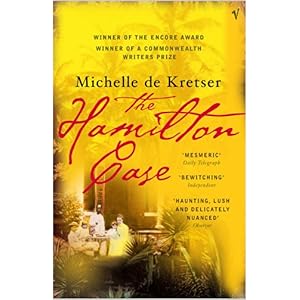
Michelle de Kretser: The Hamilton Case (2003)

Edition:Vintage, 2004
Review number: 1471

The genre of post-colonial literary fiction has become one of the mainstays of the Booker Prize, with wins for several over the years. When starting to read The Hamilton Case, I thought that it was strange that this novel, set in Ceylon in the generation leading up to independence, had been overlooked by the judges  - and I am not the only one, as Hilary Mantel (herself now of course a double winner of the prize) suggests that it should have made it to the short list in her endorsement on the back cover.

Sam Obeysekere is a Ceylonese from a wealthy background, descendant of a family which has worked with the rulers of the island for centuries (hence the schoolyard taunt, "Obey by name, obey by nature). His father's profligate generosity destroys most of Sam's inheritance, but not before a (local) public school and then Oxford University education let him become a prominent lawyer, who then achieves fame by solving the murder case of the title, leading to the arrest of an Englishman for the killing. This all takes place against the background of nationalist unrest (parallel to, but less well known to me than, Ghandi's campaign in India), in which Sam's brother-in-law (and long term hated rival) Jaya plays a prominent role.

Much of the novel is told from Sam's point of view, but not all of it. I prefer the parts of the novel which are told by Sam, with observations which appear in the third party narrative such as "He gave no signs of understanding that his life had been a series of substitutions" being irritating brickbats from a writer who has shown herself able to use Sam's one-sided account to portray the relationship between Sam and Jaya with subtlety and humour.

The later parts of the novel become a different story, of madness and ghosts, but this is nothing like as powerful as the first half. I found myself no longer being engaged by a novel which initially seemed to be one of the best (excluding things I had read before) I was going to read in a while. Some of the short chapters remain atmospheric, but the real meat of this book is exhausted by page 121, the end of the second section and the Hamilton murder case itself.

Perhaps this change is partly deliberate: there have been many people who have lived lives of early promise and a brief flowering which then go nowhere - at least in some terms. But it is odd: to catalogue the life of a Sri Lankan who would have been closely associated with the British colonial regime in the period after independence could have been an interesting story. There is little of this to be gleaned from what Kretser chooses to write about, which is basically Sam's inability to relate to those close to him - his parents, his sister, his wife, and his son.

Perhaps Hilary Mantel only read the first half of the book; perhaps there is more to the second half than I saw - as I find Mantel unreadable myself, I am unlikely to appreciate the same things in fiction that she does. The best rating I can give The Hamilton Case is 6/10, despite the brilliance of the beginning.

Sunday, 16 December 2012

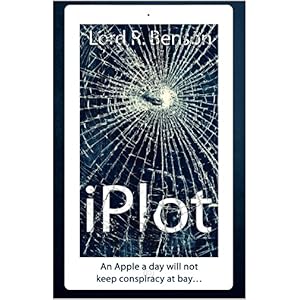
Lord R. Benson: iPlot (2012)

Edition: Marador, 2012
Review number: 1470

A simple but arresting idea sets off this thriller: a couple pick up the wrong iPad after an airport security check when travelling to Australia, and find that it is fill of files about terrorism, including copies of hate mail sent to the Australian Prime Minister Carla Moore. The documents are fairly swiftly erased, the iPad having a feature that makes it possible for the owner to delete documents on a lost device. When Carla Moore falls ill suddenly, they suspect that there might be a link between the event and this iPad, but, having nothing concrete to show the police, they need to investigate for themselves.

iPlot starts slowly, and I found the basic idea of the swapped iPads difficult to believe: surely it can't be the case that there is no security to stop unauthorised users accessing the content on an iPad without entering a password? I'd be surprised if there were no apps to add biometric authentication capabilities such as iris scanning to iPad authentication. I am not an iPad user, but the answer to both questions appears to be yes, from a quick search on google, though it seems to be possible to bypass iPad authentication; this is a list of biometric authentication apps. So the idea that it would be possible to pick another person's iPad and only realise it is not your own when you see it doesn't contain the film you planned to watch on your flight - especially as the iPad concerned contains seriously sensitive data. My doubts made it hard to accept the verisimilitude of the story from the beginning.

There were other flaws which did not help. There are some rather clunky passages of prose, including the second chapter, which consists of lengthy and dull extracts from the documents on the laptop, including information about the death of Alexander Litvinenko, which is likely to be fairly familiar to anyone who has followed the news over the last few years, at least in the UK. This material could have been better introduced, and there is no need for so much of it, just a few bits and pieces to establish the type of content which is stored in the iPad. Anyone who has watched shows like Spooks or Homeland will already have a pretty good idea of what these documents will be like, so it will feel like familiar territory which could be skipped to many readers. There is something of a tendency to over-explain the background throughout, especially as many of the topics involved (the iPads, the terrorist plotting, the science) are likely to be of interest and fairly well known to potential readers, who I suspect will be - I hesitate slightly to say - geeks like me, who will be drawn in by the iPad idea.

The characters are poorly drawn; they all seem to have the same personality, pretty much, and even their physical descriptions are similar in many cases - this is a world of good looking, intelligent, and basically nice people.

But there are good sides to iPlot too. The story builds to its climax well, and eventually the most cynical reader will be drawn in. In terms of the plotting, I would have liked to have seen more use made of the iPads after they set the plot in motion, but the finale of iPlot was good anyway. I liked the technological and scientific aspects of the novel, even if they were over-explained, but I wanted to enjoy iPlot as a whole more than I did. My rating - 6/10.

Tuesday, 11 December 2012

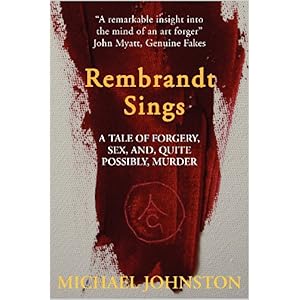
Michael Johnston: Rembrandt Sings (2012)

Edition: akanos, 2012
Review number: 1469

Art historian Bill Maguire tells the reader his life story in Johnston's new novel. At least, he narrates a version of his life: he is clearly a constant reviser of material from his journals, and undercuts much of what he says with sardonic footnotes. His story is bound up with that of a rather older man, a painter named Joe Rembrandt, and most of Maguire's story is taken up with Joe's recital of his own life story, told to the young Bill while in the last stages of terminal illness. And in turn, Rembrandt's story is bound up with (fictional) painter Alexander Golden, whose daughter he married. Or perhaps not: it is clear fairly quickly that not only is Bill Maguire an unreliable storyteller, so is Joe Rembrandt, even if he does share an insight into Golden's paintings which Maguire uses to establish his academic reputation.

What unites these characters is a love for (and knowledge of) fine art. Even their involvement in dubious activities - including forgery and possibly, murder, as the front cover puts it - is fuelled by and part of their love for painting. Johnston captures the power of their obsession well, which is particularly useful, as it is of vital importance to the plot, as well as making the characters sympathetic: a forgery (and even a murder) for the love of art is easier to accept than the same crime carried out just to make money.

Rembrandt Sings is not intended to be an action thriller, and is more concerned with the motivation of the forger than anything else. The ending has a nice thriller-style twist to it; if reading the novel, do not skip forward as you would ruin a treat. Having said that, it is also a novel I wished had been longer, a rare object. There is nothing much recorded from Bill's live between the early twenties when his academic career was beginning and the position of senior and respected art historian, a likely candidate for the next head of the Tate gallery, who is looking back to his early days in the art world. Perhaps nothing out of the ordinary would have happened, just a standard academic career path, but more information would have been interesting.

Painting is not really my thing (colour blindness means that I tend to have problems perceiving pictures in the same way as people with normal vision), but I do enjoy fiction about art. I was in fact just starting Michael Gruber's Forgery of Venus as I finished Rembrandt Sings, another novel about art forgery, with a rather different slant on the subject. And I love Iain Pears' Jonathan Argyll series, which seem to have finished, unfortunately; they are more traditionally crime stories, and have less convincing forgers than Joe Rembrandt (which is not surprising, as it is  not the point of the books). I don't think that, even though music is the art form dearest to me, I would find a musical faker as interesting as the characters in this book, no matter how well done.

Altogether, I found this an interesting and impressive picture of the forger, with a clever twist, though lacking in pace for most of the time. My rating: 7/10.

Saturday, 1 December 2012

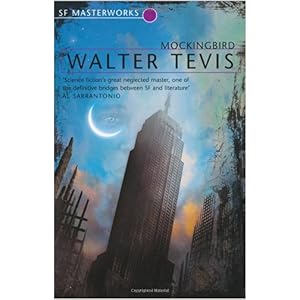
Walter Tevis: Mockingbird (1980)

Edition: Gollancz, 2007
Review number:1468

The best known novels by Walter Tevis are famous as films: The Hustler, The Man Who Fell to Earth, and The Color of Money - a trio which certainly demonstrates versatility. As a genre writer, he is also known for Mockingbird, here reprinted as one of Gollancz's "SF Masterworks" series.

One of TS Eliot's most famous lines, known to many who have no idea who wrote it (one online quotation search engine bizarrely attributes it to actor Vin Diesel) is "This is how the world ends, not with a bang but a whimper". It is almost a one sentence summary of Mockingbird, and is quoted at one point towards the end of the novel. Perhaps "human civilization" would be more apt than "world", but otherwise the mood and fit of the line is pretty much perfect.

The setting of Mockingbird is at the end, then, of the human history. With all tasks handled by robots, humans have sunk into a listless, drugged apathy, almost entirely of their own (or their ancestors') making. The main characters include one of the last, most advanced, robots to be made, named Spofforth, and one of the youngest remaining humans, named Bentley, who eventually realises the meaning of the demolition of his school once he and the rest of his year group leave: there are no more children.

The third major character is a woman named Mary Lou, who has been living an outsider's life in New York Zoo, inhabited otherwise only by the robots who manage it and who pretend to be children visiting - and which may well also be many of the exhibits. She has been surviving by eating sandwiches made available by a bug in the management system: a robot is provided with them to fill a vending machine, but always has five more than fit, and no instructions for what to do with them, so is effectively immobilised until May Lou takes them from it. She has managed somehow to escape from the system and is therefore free from the drugs taken by every other human. The robots have seen that humans are happier in general without high intelligence or dramatic events, so the drugs make their takers less excitable and less clever.

Once this is established, a strange thing happens, the most important event in the story, and one which almost knocks the whole novel off its mournful path. Spofforth denounces Bentley as a criminal - a true accusation, for Bentley, having worked out how to read from a book, teachers Mary Lou, and this is a crime because reading can distract from the bland happiness which humans are supposed to experience. Bentley is sent to prison, and Spofforth moves himself and Mary Lou into an abandoned apartment, following a rather atavistic prompting of a hidden part of his mind, which was not constructed but is based on a recording of the mind of a human being.

With the end of reading, of education, there is so much that people just don't know any more. Like a prehistoric inland dweller who has never seen the ocean, Bentley comments: "I did not know sea water was undrinkable. No one had ever told me." This, on top of the general apathy brought by the drugs, is really what is bringing the end; things break down, and no one knows how to fix them or how to get a robot to fix them, and no one cares to do either, anyway. Temporary measures, such as the one which added contraceptives to the drugs to curb population increase, are set in place, but then no one remembers to rescind them afterwards.

The title of the novel comes from a caption in a silent film watched by Bentley, who is put to recording the words of such films as no one can read the captions any more: "Only the mockingbird sings at the edge of the forest". Apparently, the Northern Mockingbird does indeed live and sing at the edge of forests during their breeding season, but Tevis' intention is to say something about his theme, but I found it hard to choose between several different interpretations of the phrase. The lives which are led by Bentley, Spofforth, and Mary Lou could be said to be a mockery of those who are living normal lives in the forest, and the mockingbird a symbolic outsider; the odd relationship between Spofforth and Mary Lou, while she is pregnant, is a mockery of twentieth century city life (as well as referencing the breeding season of the bird); or it could refer to Tevis' role as a commentator on the negative sides of the human drive to increase comfort and settle for the banal in experience as safer than living on the edge.

This is the kind of novel I would point to as a counter to those who think nothing with a science fiction genre label on it can be literary, or discuss real issues. Dealing with apathy, depression, and suicide as it does, Mockingbird is hardly cheerful reading, but is definitely recommended. My rating: 9/10.

Thursday, 1 November 2012

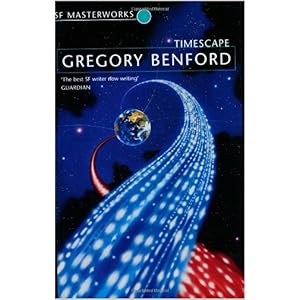
Gregory Benford: Timescape (1980)

Edition: Millennium, 2000
Review number: 1467

Gregory Benford is an author whose writing I like, but I have never got round to reading much of his work. Timescape is a classic science fiction, not quite about time travel but considering how history might be affected by the possibility of sending messages to the past. Half of the novel is set in San Diego in 1963, and half in Cambridge in 1998, with chapters more or less alternating between the two settings. (The dates were clearly chosen to that the novel appeared halfway between the two.)

In 1998, the world is experiencing a massive environmental catastrophe caused by mutations in oceanic plankton induced by the indiscriminate use of certain chemicals in agriculture. Physicists in Cambridge are investigating tachyons, sub-atomic particles which travel faster than the speed of light, and it occurs to one of them that it would be possible to send some kind of message to the past by sending a beam of tachyons to the point in space where the Earth once was, and interfering with physics experiments being carried out at the time when the Earth was at that position (direct detection of the tachyons being impossible, as technology wouldn't be in a position to pick them up at that point). The early sixties were chosen as a target because experiments which can be affected by beams of tachyons were beginning to be studied then.

Some people divide the science fiction genre into "hard" and "soft" writing. Hard SF is concerned with science: it views the genre almost as a way to carry out an informal discussion of more less speculative ideas, usually in physics, in a fictional setting. Soft SF is more often interested in the social aspects of science and technology, centring on culture. It is perhaps something of an outmoded way to view the genre, which seems to be more simply speculative in nature (i.e. centred around "what if" ideas) than anything else, where science fiction elements (such as space travel) are not simply props to a story which doesn't depend on them except as part of the background.

If the distinction has any meaning, then Gregory Benford has usually been regarded as a hard science fiction writer, partly because he is also a physics professor, and partly because he is also concerned to get the science in his stories as compatible with known fact (and interesting fact-based speculation) as possible. Most of the physics in Timescape is  based on what was known, or what at least seemed plausible in 1980, including what is quite likely to be the earliest mention of dark matter in a science fiction novel. The exception to this is the tachyons, which physicists still generally doubt could possibly exist. How they could behave if they did exist has been the subject of a certain amount of speculation, and Benford builds in part on this. And of course, tachyons are needed for the central plot device in Timescape of sending the message back in time, even if this violation of causality is one of the main reasons that their existence is considered unlikely. Benford has a rather convoluted but clever and interesting mechanism to get out of this trap, which I will not give away.

At the same time, Benford is able to write well enough to avoid the major criticism often levelled at hard SF writers, that they neglect important aspects of the story such as characterisation because of their overwhelming interest in the scientific idea. In Timescape, the reader does care about the characters in both timelines, and the background is believable - possibly in part because the setting is the physics research community which Benford is a member of in real life. It all works well, and the end product is a fascinating novel - at least, I think it would be to anyone interested in the physics. My rating - 9/10.

Thursday, 18 October 2012

Michael Moorcock: The Twilight Man (1966)

Also available under the title The Shores of Death
Edition: Sphere Books, 1970
Review number: 1466

Like The Blood Red Game (which I bought in the same second hand bookshop as The Twilight Man in May), this is a reworking of an earlier piece of writing, in this case a serial which was written to fill space in New Worlds during the earliest months of Moorcock's editorship of that later famous science fiction magazine.

Clovis Marca is a former leader of Earth's government, leading a humanity which is now doomed to extinction after an alien visitation has left everyone infertile. As the book begins, Marca returns from a year in space, his way of dealing with the catastrophe. The desperate decadence of the society he finds on his return is a clear precursor of my favourite Moorcock series, The Dancers at the End of Time.  The Twilight Man is a staging post between it and the Arthur C. Clarke novel, The City and the Stars, which appears to have influenced Moorcock greatly, though I do not actually know that he read this particular novel (as I discuss in its review). Doomed decadence is one of Moorcock's recurring themes, as well - part of what he wants to say to his readers through his writing.

While much more Moorcockian (so to speak) than The Blood Red Game, The Twilight Man is still not fully individual in its style: clearly still the work of a writer finding his way, even five years after the publication of the first Elric novel, The Stealer of Souls. Perhaps because it is more like the author's later work, The Twilight Man is less interesting to read than The Blood Red Game: it is slightly too much like the fan's guess as to what early Moorcock would be like to engage.

Reasonably enjoyable in itself, I would give The Twilight Man 6/10.