Showing posts with label short stories. Show all posts

Thursday, 21 May 2020

фANTASTIKA: Almanac for Bulgarian Speculative Fiction

Edition: Terra Fantasia (Association of Bulgarian SF & F Writers and Artists), 2020
Review number: 1520

This is an extensive collection, a showcase of Bulgarian science fiction and fantasy, including both writing (translated into English) and art. I have never read any Bulgarian speculative fiction (at least, not knowingly), and so I'm approaching this with interest and am hoping to be impressed. I've written a mini-review of each story, and at the end I've added some general thoughts about the anthology as a whole.

The first section in the anthology contains stories which are considered to be straightforwardly science fiction.

The Last Interview of Adam Sousbe, by Lyuben Dilov (short story)
This story positions itself as a journalistic interview of a proponent of male rights in 2980, which has been proclaimed the "Year of Man" - the final interview before Adam Sousbe is murdered. The idea that gender inequality might be reversed in the future is not unique, of course, and it can be hard to tell whether a story on this theme is intended to highlight continued unequal treatment of women or to suggest that feminism has gone too far already. It is very much a John W. Campbell story, complete with the feeling of slight discomfort at the politics (though here I am less sure of the intention than I would be with Campbell's). I couldn't see a date for this piece, but the "about the author" paragraph places him in the 1970s, and it is certainly a story which wouldn't be at all out of place in any collection of short science fiction from that decade.

Beating the Air, by Velko Miloev (short story)
What would happen if people could choose to become a wind? This brilliant story takes this strange question and runs with it. The point of view character is a "wind inspector", checking up on someone who has taken that option, who is conversing with a wind that is tired of paid work producing picturesque effects for a poet. Reading this whimsical story is one of my fiction highlights of my 2020 science fiction reading, and it deserves to be widely known.

It's Only Fair, Botkin, by Khristo Poshtakov (short story)
There is still something of a tendency in science fiction to depict space exploration as a glorious adventure. In this story, it is a tedious job, and one which doesn't reflect well on the explorers. The story is a thinly veiled attack on the attitudes of Earthly colonialists on the native peoples they encountered; fairly predictable, and less interesting to me than the depiction of what it's like to be doing a dull job in space at the start of the story. Worth reading, but less good than the stories which precede it.

In the Beginning Was the Subway, by Lyubomir P. Nikolov (short story)
The beginning of this story is a bit incoherent, but by the second page it resolves into a tale of a ghost arranging for a young man to receive a mysterious device, though which esoteric scientific information is imparted to him over a period of weeks. It's a weirdly utopian tale, which in tone reminded me of Olaf Stapledon, with an old fashioned, didactic tone. Interesting, but not a story which appealed to me.

Three Tales of a Very Windy Town, by Lyubomir P. Nikolov (short story)
"Up on the cliffs by a rough sea, there falteringly existed a town" is a great start to a story. It sets the whimsical tone of an amusing tale, which is essentially three tall stories about the wind. Together with Beating the Air, it suggests that Bulgarian writers may have something of an obsession with the wind! It is very unusual in an anthology with several authors to have two stories in a row from the same author (especially as they are not among the shortest stories); if I had to pick, I would choose this one to keep - it is both more inventive and more enjoyable to read.

Virgil and the Water, by Svetoslav Nikolov (short story)
Another strange story, of the Roman poet Virgil, who in this version oversees the whole of the history of the Roman Empire, and is obsessed with plumbing. From the note following the story, it appears that this is likely to be the most well known story from this collection to Western readers. It's engagingly written, but to me suffers (in a slightly bizarre way) from one of the major problems facing science fiction authors: finding a good way to give the reader all the information s/he needs in order to be able to understand the story. Because of the way this story works, the infodumps here are not about interplanetary trade relations, or the foibles of faster than light travel, but concern Roman history. In some ways, this is brought to life by the insertion of Virgil as narrator into the centre of events, but I suspect that there will be many readers whose interests don't extend to a summary the events of six centuries in a few pages.

How I Saved the World, Or, The Best Job by Valentin D. Ivanov (short story)
Training to be a hero is not fun in a (minimally described) post-apocalyptic world. Obsolete equipment and vehicles do not have the expected glamour. But just wait until you find out what the job actually entails.... Humorous story with some neat physics in the twist. A short, but excellent story.

Deflation, by Valentin D. Ivanov (short story)
Illegal astronomy?! This very short story is about an undercover investigation into illegal astronomy, and right from the beginning I was hooked: why is the use of telescopes banned? Unusual for these stories, Deflation is set into the USA, in may ways still the spiritual home of modern science fiction (and, indeed, a lot of modern astronomy). Not quite as good as How I Saved the World, but Deflation also has a good reveal of the physics involved at the end.

Dragonflies and Planets, by Aleksandar Karapanchev (short story)
Even shorter, this two page story is a beautiful lyrical prose poem about the exploration of distant worlds. Dragonflies and Planets is a distillation of the sense of wonder which lies at the heart of science fiction.

The Empty Room, by Aleksandar Karapanchev (short story)
Karapanchev's second story is also short and poetic, about the seasons and death and renewal, but is less successful than Dragonflies and Planets. However, the intention is to chill rather than enchant, and it certainly does that.

The Most Terrible Beast, by Khristo Poshtakov
This amusing story is the space exploration equivalent of tall fishing stories in a bar - swapping tales of the most hair-raising beasts encountered on newly discovered planets, each one topping the last with larger, more fearsome and dangerous creatures. Here, it's accompanied by some fun but seemingly unrelated cartoons, perhaps the most unusual of all the art in the book.

Father, by Ivaylo G. Ivanov (short story)
A son has a lot of questions when the police question him because his father, dead for many years, appears to have left his fingerprints at a robbery scene. This is a story which has an emotional punch, though the twist at the end is unlikely to take any reader by surprise.

10-9, by Nikolay Tellalov (synopsis and extract from a novel)
As the title suggests, the topic is purportedly nanotechnology (a nanometer is 10-9 metres), though in the extract itself, there is not a great deal of nanotechnology to be seen. I found this tale confusing, especially the time shifts within the extract (which starts, "Thirty-two years earlier") - the synopsis doesn't give sufficient temporal anchors to make it possible to work out where the different times fit within the synopsis. The writing itself is good, but I don't think the presentation of this story is helpful to it.

To Wake a Dragon Girl, by Nikolay Tellalov (synopsis and extract from a novel)
Tellalov's talents as a writer are much better served by this story. It's a love story, and also, in a sense, a tale of an alien encounter. One of my favourites from the anthology.

Sun Untouchable, by Nikolay Tellalov (synopsis and extract from a novel)
A third excerpt from a longer Tellalov story; even though it is just a part of the whole, it is one of the longest contributions included in the anthology. This tale has illustrations by the author (where elsewhere the art included in the collection is just that, with no connection to the literary content). Of all the art in the book, I least liked these illustrations. And this story failed to grab me; To Wake a Dragon Girl is easily the best of the three Tellalov tales.

Love in the Time of Con Crud, by Elena Pavlova (short story)
Finally, a story by a female author - I was beginning to wonder if science fiction in Bulgaria is a completely masculine phenomenon! A story where the epigraph is one of my favourite silly physics jokes is sure to be good... It's a time travel story set in 2017 and the 2030s, and one of especial relevance now, as it's about attempting to derail and epidemic which leads to a permanent drop in the quality of life around the globe: "Helsinki 2017 takes pride in its pure water. Helsinki 2030 doesn't have that luxury." It's unintentionally chilling to read that line, published in 2019, in May 2020 - if we don't get things right, now, then what will life be like in 13, 15 years time?

The Assassination, by Johan Vladimir (short story)
This story begins the second section, classifying its stories as fantasy and magic realism. The title is simply a description of the subject of this lengthy story, about the planning for an assassination. The science fiction elements are provided by the central character, the assassin, who has visions of long-past events, other deaths and executions, and by the zmeys, the mysterious guardians of a utopian world order. This is hugely ambitious and complex for a short story, and is mostly successful, provided that the required level of concentration is granted by the reader. The "about the author" note reveals that Johan Vladimir is the second woman author here, writing under a pseudonym.

The Coin (Part One of Aurelion: Eternal Balance), by "Lights amidst Shadows" (synopsis and extract from a novel)
Any story by a large collaborative group of young authors is an unusual beast, and this is in fact a synopsis of and an extract from a novel, first of a trilogy for young readers. It is a story about a clash between science and magic, the coin of the title proving to be the key to preserving the latter. The extract consists of the prologue and the first two chapters from the novel - starting as one of the main characters has just had his pocket picked, losing the coin. The extract makes me want to read the whole trilogy despite being considerably older than the target audience - and I would not have guessed either that the tale was written by a group, nor that they were "children and young people" (as the note at the end puts it). It stands alongside the rest of the anthology with ease.

They Don't Believe in Fairy Tales, by Martin Petkov (synopsis and extract from a novel)
In this case, the "synopsis" is a summary of a discussion of the nature of law and the breaking of laws, and a link between this and children no longer believing in fairy tales. I'm quite glad to have this discussion in a shortened version - what there is appears to be just enough to provide the setting for the story, while letting the reader get to the action in only a page and a half. In the end, though, the extract doesn't really work, not being long enough to do more than give a vague idea of what the novella might be like - the ideas are clearly interesting, but not how they are worked through.

I, Sinner Ivan by Nikolay Svetlev (synopsis and extract from a novel)
Another extract, a story based on the life of Ivan Rilski, a tenth century hermit who became the patron saint of Bulgaria. It is a fantasy weaved around the basic biography of the saint, portraying him in this extract as a strange child, half in the mundane world, half in a spiritual one where the Christian God and pagan deities are close by and where he can command strange powers. Without the rest of the story, I found it quite hard to follow what was going on - it's clearly an unusual story told an a strange way, but it was not immediately comprehensible.

Mina, the Spells, and the White Vial, by Vesela Flambulari (synopsis and extract from a novel)
This story is for children, and to me seems unlikely to appeal to older readers; this is perhaps to do with the tone, which is very much in the face of the reader. It's a novel about a school for gifted children, gifted in the artistic sense, though this is a world with magic in it too. The extract didn't to me give much feeling for whether the novel would be more rewarding; it is taken from early parts of the book, before the main part of the plot starts up, it seems.

Orpheus Descends Into Hell, by Georgi Malinov (synopsis and extract from a novel)
An alternative universe, in which the Bulgarians conquered Constantinople and rule the known world, at the end of the fifteenth century when this story is set. Strange things are happening across the empire, though. Again, the extract is rather unsatisfying; I think I would much rather have read one of Malinov's short stories, a complete work.

The Dragon and the Orange Juice, by Genoveva Detelinova (short story)
A humorous short story about wizards trying to control a dragon. Vlad is different to the other wizards, as can be seen from the results of his trying to explain mobile phones to his raven familiar. He is convinced he's going to die soon, so his major preoccupation is to amend his bucket list so he can get it done and to hone his "famous last words"; the last thing he wants is the dragon, the national icon, to be misbehaving. This is very silly and quite funny, even in translation, which often flattens humour.

Journey to Akkad, by Val Todorov (extract)
This story marks the beginning of the third section of this compilation, which is made up of avant garde science fiction. Journey to Akkad is (as might be expected from the avant garde label) a strange story, poetic stream of consciousness, describing a journey through the land of the dead. It has good illustrations by Plamen Atanasov. Interesting and enjoyable to read, though remaining baffling.

The Book, by Val Todorov (extract)
The Book is a second extract from the same source as Journey to Akkad. It's a lot shorter than Journey to Akkad, and is much the same in style, tone, and quality.

The Thing Gone with The Birds, by Val Todorov (short story)
This is like a more surreal version of the Kafka's famous story Metamorphosis. Rather than a cockroach, Mr S. turns into a balloon... Another interesting but weird story, a lot more fun than the other two.

The Film-thin Bound, by Kalin M. Nemov (short story)
Shades of Samuel Beckett's "I can't go on, I must go on" immediately sprang to my mind reading the first paragraphs of this story, which almost literally repeats this, at least in the English translation. In two pages, it moves from death, mourning and despair, to a new love, and a heroic salvation. It doesn't to my mind quite work; it would take a top class literary master to manage such a change in that short a space, and the initial desperate sadness is much better portrayed than the ending, which as a result approaches glibness. Interesting, and a gallant attempt to be great.

Asked the Soldier, "Who Called Me?", by Yancho Cholakov (short story)
This story starts with affecting emotion, as did The Film-thin Bound (is there something about Bulgarian avant garde fiction which makes it easy to convey emotion), and goes on to deal with a topic which perhaps now seems difficult to discuss in a way which it might not have done a few months ago: the way that travellers can bring disease which may be fatal to those who have no immunity. Perhaps the most interesting story in the anthology, though in places the translation doesn't seem quite as good as many of the other stories here.

The Story of the Lonely Ranger, by Yancho Cholakov (synopsis and extract from a novel)
The synopsis of this work is almost more a description of the methods used in it rather than the plot - it's more a multimedia dossier than a novel, containing "pseudo-documentary" photos, drawings, and musical notes". The plot sounds rather Moorcockian, as "the huge figure of the Lonely Ranger is set against the dying mankind" - and hopefully the work offers an interesting depiction of the nature of heroism/villainy and the end of civilisation for the current era. Unfortunately, the excerpt - a half page of thirteen rather sentences reading like a scene from a gory pulp monster movie - is far too short to make a sensible assessment.

A Small Step, by MĂ ri (short story)
Three actors are hired to pretend to be astronauts as NASA fakes the first moon landing. A fun story with twists even though short - I'm not sure why it's considered to be avant garde.

Impossibly Blue, by Zdravka Evtimova (short story)
A story about writing stories, a story about life, writer's block, and the neurotic thoughts that pass through most people's minds - maybe especially writers - from time to time. And it is fantastic.

Wrong, by Zdravka Evtimova (short story)
Another story about writing from Evtimova, this time about translating a work that is disliked, until a meeting with a mysterious stranger. Also good, it is pretty similar to Impossibly Blue.

The Matrix: Resolutions, by Atanas P. Slavov (short story)
This is Matrix fan fiction - it's basically an imagined conversation with the films' central character Neo. Possibly reactions to the story will depend on what the reader thinks of the films, personally I can take or leave them, and the same is very much true for the story.

The Keresztury TVirs, by Ivan Popox (fictionalised book review)
This article starts the final section, entitled "Futurum", a section title which is very unclear (and perhaps deliberately so). The Keresztury TVirs purports to be a review of a banned book describing computer viruses which affect cable TV transmissions, allowing editing of the picture and audio. It discusses their use by radical political factions as well as pranks and commercial advertising. Interesting and thought provoking - as science fiction should be!

Mindster, by Valentin D. Ivanov (short story)
Valentin D. Ivanov already has two stories earlier on in this anthology. This is rather more straightforwardly science fiction than The Keresztury TVirs, suggesting that the meaning of Futurum is simply near future science fiction. That is, assuming that the central concept is in fact a possibility: the story is about moving beyond file sharing online to mind sharing. Interesting, and a fitting conclusion to the anthology.

Overall thoughts

I was sent this anthology as an ebook with a request to let the compilers know if there was anything which was significantly less good than the rest, something which should be dropped. It's a big anthology, and the stories do not all appeal equally - but this is true of every anthology, and there is nothing which stands out as much poorer than the other stories. On the other hand, there were several stories which I enjoyed a great deal, including one I would pick as among the best things I've read this year in any genre.

On the negative side, I was not entirely convinced by the structure of the anthology. In a multi-author compilation, it is unusual to feature authors multiple times. This is done repeatedly here, and is more obvious because most of the multiple contributions are clustered together. This has the unfortunate consequence that it makes it seem as though there are not enough good science fiction and fantasy writers to fill the anthology with unique contributions: I hope this is not the case, and that there are plenty of other writers who could have been included. The biggest problem with the content of the anthology is the number of excerpts from longer works. They are clearly meant to give a flavour of the novel they come from, but in some cases, the extract is too short, or the accompanying synopsis doesn't quite give enough context to make for satisfying reading, which is a pity.

Like any other local science fiction community around the world, Bulgaria's is still influenced by the US, but this collection shows that there is local flavour there too, and a good deal of talent. I hope that the release of this ebook raises the profile of Bulgarian writers around the world - there are several I will seek out, given the chance (and, I'm afraid, the translations, as I speak no Bulgarian).

My overall rating: 8/10.

Tuesday, 18 May 2010

Charlotte MacLeod: It Was an Awful Shame (2002)

Edition: Five Star, 2003
Review number: 1401

Of all genre writing, it may be the case that crime short stories are the most difficult to pull off, despite the pioneering example of Arthur Conan Doyle, whose Sherlock Holmes short stories remain among the best of this type. To fit a convincing description of a crime, several suspects, their motives, means and opportunity, as well as the solution, into a few pages is not easy. To make them funny as well is so difficult that to try seems almost like showing off.

And in this collection, Charlotte MacLeod manages to do this without apparent effort. Not only that, she is often able to convey an enviable sense of place: most of the stories are set in a New England clearly dear to her heart. The stories are also rather old fashioned, and portray an upper class New England that almost certainly became extinct before the Second World War (the original publication dates for the stories are between 1963 and 1989, mainly in the first decade).

The quality of the stories is variable, but there are no really poor ones in the collection. However, the ordering of the stories does leave something to be desired for newcomers to the author (as I was when I picked up this book in the library). MacLeod wrote two long series of novels with recurring characters, and fans will be pleased to know that both make appearances in this collection. The problem is that the first two stories here are from one of these series, and don't really stand alone too well, and this is an off putting start for those readers not familiar with the novels. The stories from the second series work much better, appearing later on and apparently coming near the start of the series' internal chronology. These series characters made me think of Dorothy L. Sayers' short stories, which are not particularly distinguished (and certainly not as good as MacLeod's), but which are collected in such a way that Lord Peter stories draw the fan into reading each of the collections. There, too, a certain knowledge of Lord Peter is assumed, but not perhaps as much as MacLeod does in the first two here. The first story, which provides the title for the collection, also deals with the childish rituals of a fraternity lodge, and so seems particularly removed from real life.

Similarly, the level of humour varies between the stories. Some of the best moments, such as the magnificently silly spoof The Mysterious Affair of the Beaird-Wynnington Dirigible Airship and the Wodehouse-style combination of goat, shotgun, helium balloon, trousers and halibut in Fifty Acres of Prime Seaweed, are not likely to be quickly forgotten by any reader.

The old fashioned air occasionally reminds me of O. Henry or P.G. Wodehouse: very old fashioned, and similarly cosy. In no way could MacLeod's stories be described as gritty reflections of the mean streets of modern America. That is not necessarily a bad thing; there should always be a place for expertly written, light and fun reading, even if it occasionally strays into the twee. My rating: 7/10.

Thursday, 12 July 2007

E.L. Doctorow: Sweet Land Stories (2004)

Published: Abacus, 2007

Sweet Land Stories is a collection of five short(ish) stories, all but the last published in the New Yorker in the first few years of this decade. In order, A House on the Plains describes a young man's discovery that his mother is a serial killer, enticing men to a midwest farm to kill and rob them; Baby Wilson is told from the point of view of the boyfriend of a young woman who steals a child from a hospital; Jolene: A Life describes the disastrous relationships of a young woman who initially marries at fifteen to escape a foster home; Walter John Harmon is the story of a cult whose founder is a garage mechanic who was caught up in a seeming miracle; and, finally, Child, Dead, in the Rose Garden is about the choices made by an FBI agent initially called in to investigate the discovery of a boy's body in the White House grounds but later instructed to be part of a cover up.

The first four stories share many themes; the fifth one is a bit different (and is the one not from the New Yorker). This can be seen in the setting; while Child, Dead, in the Rose Garden takes place mainly in Washington DC with an episode in Texas, the others are all set mainly in the midwest. Like most (if not all) of Doctorow's work, they look at America from the points of view of the little people, the outsiders in US society: those who remain the poor and downtrodden, despite the inscription below the Statue of Liberty. A House on the Plains and Baby Wilson go so far as to use a secondary part in the drama as a narrator; the main character is even denied a voice in their own story. Again, the final story is a little different, but achieves a similar result by making the dead boy the outsider, a victim of political machinations, while the investigator can do little but look on and wrestle with his moral dilemma: it subverts one of the normal rules of the crime genre, which is that the story is about the mental battle between criminal and investigator. All the stories make a point which is critical of American society (even if the stories are set in the past, which is at least apparently the case with the first three), with the final tale being overt political satire, with the boy a symbol of those without a voice in modern US politics.

The title of Sweet Land Stories comes from the US patriotic song, My Country, 'tis of Thee, which describes the country as the "sweet land of liberty". Liberty and sweetness are clearly in short supply in these stories, but Doctorow is not the first to use the sweet land quotation ironically - there is a film of the same name, about the struggles of a German girl who travels to Minnesota during the war to marry a farmer there. The use of lyrics from a patriotic song as the title suggests a link to Steinbeck, specifically to The Grapes of Wrath. Though less downbeat, there is something about the stories which is also reminiscent of Steinbeck, which is only partly thematic.

The cover of Sweet Land Stories describes the book as "by the author of The March". This seems an odd choice from Doctorow's past to me, unless the assumption is that readers of literary fiction only remember the author's most recent other work. There are other Doctorow novels which are far more like this collection, such as Ragtime. A more personal objection: why is it that from such a distinguished career, full of novels I enjoyed immensely, why pick the one I found unreadable as a comparison?

Thursday, 25 May 2006

Poul Anderson: Time Patrol (2006)

Edition: Baen, 2006
Review number: 1314

The Time Patrol stories of Poul Anderson are classics of the science fiction genre, dealing with the efforts of the eponymous group to maintain the status quo of history against the accidental or deliberate manipulations of other time travellers. This book, sharing the name of the original story which began the series, collects them all (and it is not to be confused with an earlier volume, also called Time Patrol, which contains only the first two or three stories).

The central character in the stories is Time Patrol agent Manse Everard, who is "unattached" - basically, a troubleshooter who can visit any time and place in order to sort out serious problems. (Most Time Patrol agents work in a single milieu, either as researchers studying the period or as officials regulating the activities of time travellers.) Apart from the first story, which is about Everard's recruitment, the basic plot of the remaining stories is simple and consistent: some problem requires Everard's intervention at a particular time and date.

Though the stories were written over a period of five decades and though they vary wildly in length (between about 30 and 160 pages, as reprinted here), they are very similar to each other. Anderson doesn't quite make the different periods and locations all that distinct (though having several stories set just outside the borders of the Roman Empire doesn't really help with this). Everard also remains pretty much the same through the series, maybe a little more world-weary, but basically an action hero. Like many long running series of self-contained stories, the Time Patrol tales work better in relatively small doses rather than by reading them all the way through in one volume.

Given these obvious flaws, why is Time Patrol worth reading, and why are the stories important in the development of the genre? For one thing, there is one story in the series which really stands out, which would be a classic of the genre even without the rest. Delenda Est has Everard returning from a vacation on a base in the prehistoric past to his own time (the mid twentieth century) only to discover that everything has changed. In what is effectively a parallel world, he has to work out what pivotal event has been altered, and then decide if he is morally able to destroy an entire new civilization in order to bring back his own familiar time line (or alternatively destroy the lives of all those living in his own timeline to save the new future). This single story is one of the best of all those ever written about time travel.

For the other stories, the point of this series is really the introduction of adventure to time travel, and particularly to stories involving time travel paradoxes. The fates of nations, of the godlike Danellians from Earth's far future (the beings who set up the patrol to preserve their existence) rest on Everard's capable shoulders: he is a hero who can think as well as act. In the original time travel story, Wells' The Time Machine, the use of time travel is to be a mechanism allowing the main character to see the far future (which is, of course, at least partly a reflection on Wells' present); the machine itself has very little part to play in the story. It is like the visions in The House on the Borderland, or the mental link to the future in Last and First Men: the point is the vision itself, not the mechanism by which it becomes available to the protagonist. Stories of time travel to the future tend to be like this in tone, and it is perhaps the introduction of the possibility of paradox with travel to the past which makes the idea work better as the background of a thriller. (The actual introduction of the famous grandfather paradox came as late as 1947, and even then in stories unlikely to be read by the mainstream English language science fiction fan: French genre fiction, with the exception of Jules Verne, is still considered pretty obscure.) Anderson joined other American writers of his time such as Robert Heinlein and Isaac Asimov in bringing adventure to mainstream time travel fiction (The Door Into Summer and The End of Eternity are approximately contemporary with the earliest Time Patrol stories); Anderson's stories are the most epic of these as adventures.

Delenda Est is a must read for any science fiction fan. The rest are interesting in small enough doses, though a bit too similar to each other to make the omnibus a pleasure. So I would recommend seeking out other collections which contain one or more of the stories along with others, rather than investing in the omnibus.

Saturday, 19 June 2004

Peter Crowther: Infinities (2002)

Edition: Gollancz, 2002
Review number: 1246

This volume claims to be "the very best of British SF today", and its four novellas certainly represent the work of some of the most respected young authors in the genre. Ken MacLeod and Alastair Reynolds were already familiar writers to me (I had in fact already read Diamond Dogs, Reynolds' contribution, elsewhere), but Eric Brown and Adam Roberts I had yet to sample, science fiction not being a high priority with our local library service.

The first story, Eric Brown's A Writer's Life, is disappointingly unimaginative, despite being extremely well written. The narrator, a hack genre writer, becomes obsessed with a more or less forgotten novelist, not just wanting to reaqd all his books but also to solve the mystery of his disappearance. It is an old fashioned Gothic tale, and, save for travel by car and such dating evidence, could have been written by a number of writers from William Hope Hodgson onwards. Even though it lacks originality (and that is presumably because it is intended as a homage to earlier fantasy writers), it is still an enjoyable read, until the extremely predictable ending. That Brown handles the Gothic atmosphere and characterisation of the narrator and his sceptical girlfriend so well implies that he could have produced something much more inventive - and still stayed in the tradition he clearly admires.

Ken MacLeod's The Human Front is a little more unusual, an alternate reality story set in a world in which the Cold War turned hot. Here, Stalin survived an American takeover of the Soviet Union and became a Che Guevara figure, a famous guerilla leader and an inspiration to generations of radicals. Scottish teenagers are joining a secret terrorist organisation, the Human Front, within the Communist Party, ready to bring the revolution home. While this in itself would be an interesting background to a story of the life of a young Scot, MacLeod adds more - hints of a bizarre conspiracy, of secret advanced technology that has come from nowhere. This all very cleverly builds up to a conclusion which ends up arriving too quickly; The Human Front feels like a novel where the second half has been turned into a five page summary. (This is not unique in science fiction, for a variety of reasons mainly connected to magazine publication procedures in the earlier years; but I didn't expect to see an example today in a collection of this format.)

This is followed by Diamond Dogs - and this story may have seemed different to me because this is the second time I have read it. The story, a typical science fiction plot involving the investigation of an alien artefact, is extremely gruesome; the artefact is a tower, a sequence of rooms containing sophisticated mathematical puzzles, but each time an error is made a bloody punishment is meted out to the investigators. This could almost be the plot of a (rather intellectual) computer game, rather than a novel, except for the way in which Reynolds is able to give the impression of advanced mathematics without having to go into details. It is an extremely artificial scenario, but it is done very well.

The final story, Adam Roberts' Park Polar, is set in a depressing world, an ecological disaster area. Every part of the surface of the earth is used for food production, the interior of Australia covered in hundreds of square miles of unending soya. Wild animals only survive in the gardens of the ultra-rich, in gene banks, and now in forms re-engineered to thrive in the polar icecaps. There, herds of yak-like snow wildebeest feed on special algae, themselves providing food for snow lions - a small, artificial ecology. The story is one of murder in a polar research station, but it is the background which fascinates the reader; finding out who the killer is does not really matter.

While all four stories are extremely well written, they all (except Eric Brown's) share a common flaw of shorter writing in today's novel-oriented age - they seem uneasily compressed to fit the required length. In fact, they are pretty long novellas; by the standards of the fifties, say, they would be considered short novels. The four stories are very different from each other, and give a fair view of the variety in British science fiction at the moment, even if they do it uneasily in terms of form. There is no particular reason that I could see for the collection's title Infinities, but it is an excellent piece of editing.

Thursday, 18 March 2004

Len Deighton: Declarations of War (1971)

Edition: Panther, 1973 (Buy from Amazon)
Review number: 1229

This collection of short stories is the only one published by Deighton; I don't know of other, uncollected tales, so this seems to be something of an experiment in his output (as were several other books he published in the early seventies). As the title suggests, they are all war stories, though all of them have something a little unusual about them. The little twists include such ideas as having a story of air combat in the First World War, very much apparently in the style of W.E. Johns, turn out to be about the Germans. (This particular trick is repeated in another story as well, with the added element that student unrest in the thirties is used to evoke the student agitation of the late sixties.)

The stories are all very short, and they are constructed so that the twist is the most important aspect of every one of them (something more commonly considered a feature of science fiction than other genres - though writers like Frederick Forsyth do this frequently in the thriller). All that most of the stories do is set up the situation, then reveal the twist. This makes them a little short of space for characterisation and so they are filled with stereotypes.

The best story in the collection is the first one, It Must Have Been Two Other Fellows, which has a premise rather similar to the song I Remember It Well. Two men meet in a garage where one is working on his car in his spare time after the Second World War, and they recognise each other - they were together in a tank action in North Africa. Or were they? As they reminisce about it, it becomes clear that their memories of what happened are mutually contradictory. So the reader is left guessing whether they are remembering different, yet similar, events, their mutual recognition being a mistake; or whether the War was a time that neither remembers clearly, even its most exciting moments.

Generally, though, these stories are fun to read once and individually. They do pall a bit read all in one go, even though, as no prior publication details are given, the assumption is that they were intended to form part of this collection from their conception. They are too similar to feel inventive to anyone who reads all the way through, and I was left, as someone who has now read them twice, feeling that Deighton is a novelist trying a little too hard at the unfamiliar craft of short story writing.

Friday, 3 October 2003

Iain M. Banks: The State of the Art (1991)

Edition: Orbit, 1991
Review number: 1186

The State of the Art is unique in Banks' output in being a collection of short stories. It contains seven short stories, previously published in magazines and anthologies, alongside the novella The State of the Art which had appeared in the States but not in the UK. The book really falls into two parts: the Culture stories (the long novella and two others) and the rest. To deal with the latter first, these stories are basically parodies of some of the basic clichés of the science fiction genre (first contact stories, for example) or fairly heavy handed social commentary. The parodies are heavily indebted to American giants of the short story form, such as Fredric Brown, while the other stories lean heavily on the shoulders of the British New Wave, particularly Michael Moorcock. In neither case does Banks really match the quality of those whose work he draws on. The best of each group are Odd Attachments, about an alien shepherd whose disappointing love life proves disastrous for a human astronaut, and Piece, about the fight between rational and irrational thought in eighties culture.

One of the Culture stories, Descendant, is really in the same vein as the non-Culture tales; it is only incidentally set in the same milieu as Banks' science fiction novels. A Gift from the Culture and The State of the Art pick up on one of the novels' major themes, the way that the Culture reacts to other civilizations. The State of the Art describes a Contact survey of the Earth in 1977 (Contact being the part of the Culture which deals with external relations), with the aim of deciding whether the galactic civilisation should reveal itself to us or not. This isn't a particularly new science fiction idea, but the decision of one of the surveyors to remain on Earth whatever is decided makes it an interesting exploration of the theme.

I found A Gift From the Culture to be the most effective of these stories. A former Culture citizen is blackmailed into performing an act of terrorism. It has a deeper exposition of character than is usually managed in a short story; Wrobik's life seems a mess but he (and Banks manages something unusual with the gender; born female but changing sex as is quite normal in the Culture, Wrobik is made quite a feminine man) doesn't really want to change it. This reluctance is epitomised by his relationship with a faithless dancer. He is a misfit now, and presumably was always one even in the anarchistic Culture, and this is what it makes it possible to manipulate him into the act of violence he is desperately keen to avoid.

The general impression given by The State of the Art is that Banks is a novelist dabbling in short story writing, an impression which is strengthened by the small number of short stories he has produced in his career. The collection is worth reading, but in the end is likely to appeal more or less exclusively to fans of the author's novels.

Wednesday, 20 August 2003

Raymond Chandler: Killer in the Rain (1964)

Edition: Penguin, 1969 (Buy from Amazon)
Review number: 1181

There is one official, authorised, collection of Raymond Chandler short stories, The Simple Art of Murder, and then there are the eight collected in Killer in the Rain. So why was Chandler against the re-publication of these stories (he was very unhappy when several of them appeared in other, unauthorised collections). They are all early, and the development of the famous Chandler style and of the character who eventually became Philip Marlowe is easy and interesting to trace. The problem is not, though, that the stories betray an apprentice writer; they only appear to do so in relation to Chandler's later work.

When Chandler came to write his first novel, The Big Sleep, he turned back to these short stories - not just for inspiration, but for plot and character, and even for the details of description. (he aptly described this process as "cannibalization".) He then did the same for his next three novels, with the result that any fan of Chandler's work will find much that is already familiar in Killer in the Rain.

The result of this is paradoxically that these stories might well appeal to Chandler novices - the stories are good enough in their own right, and authentic examples of his work - and to die-hard fans. The latter will find themselves constantly running into nuggets that they recognise, which is a fascinating experience, and they can start to trace how both Chandler's style and one of the most famous characters in both literature and film developed. And, of course, that would also make the collection indispensable for Chandler scholars.

Thursday, 16 January 2003

Dorothy K. Haynes: Thou Shalt Not Suffer a Witch (1949)

Edition: B & W Publishing, 1996
Review number: 1140

Dorothy K. Haynes was not a name I had come across before, my eye being drawn to this short story collection because it was illustrated by Mervyn Peake. It is easy to see why the stories captivated an initially reluctant Peake (to the extent that he produced an extra "illustration to an unwritten story by Dorothy Hayes" for which a tale was duly produced). The stories are about atmosphere, for the most part exploring the edges of the supernatural. The title story is typical: a Crucible-like tale of a young girl frightened into making accusations of witchcraft. Many of them take the point of view of a lonely small child, an echo of Haynes' own orphanage upbringing.

In this edition, the original collection is expanded about half again with some of Haynes' later stories. The standard is high, but the tales are very uniform; it is a collection to read in small doses. The apparent lack of development is quite surprising, given the inclusion of the later work. Though probably found in the horror section of a bookshop or library, Haynes' stories are not really frightening despite the occasional gruesome touch. This is partly because none of them have a formal plot, being more like a passage setting the scene for a novel than a conventional short story; and yet, they are complete enough in their creation of a dourly Scots world tinged with the supernatural that they are extremely satisfying.

Wednesday, 3 July 2002

Ric Alexander: Cyber-Killers (1997)

Edition: Orion, 1998
Review number: 1103

In terms of plot, most science fiction - at least when of novel length - is some form of thriller or romance. In recent years, there has been something of a vogue for the futuristic whodunit, but there is a much longer history of cross-genre science/crime fiction including short stories as well as Isaac Asimov's pioneering Elijah Baley novels. This is particularly the case with plots involving computers and murder - computers investigating, preventing or committing crime, or being the objects of murderous impulses themselves.

The short story is a major part of science fiction history, which (because of its pulp associations) was the major form of the genre for about forty years, particularly in the U.S.A. So it might well seem that a short story collection would be an ideal way to showcase some of the ideas that science fiction writers have had about computer related crime. However, there is a serious problem for an editor seeking to select stories around the theme: computers have come to play a more important and more realistic role in science fiction as or after the short story went into a steep decline (as a result of changes in principally American reading habits). Budgets for this kind of book are unlikely to pay for wholesale commissioning of new, up to date, stories, and anyway many of today's authors are less keen to write short stories, demanding as they are in altogether different ways to novels.

Alexander as a result has chosen a selection of mainly older stories by well-known authors. (The reader gets a particularly strong impression that they are old because three of the most recent come right at the end of the collection.) There is actually one which uses punched card technology; as the story, Sam Hall by Poul Anderson, was written as long ago as 1953, this is understandable but jogs the modern reader somewhat. (As a story, it is one of the best in the collection.) It is interesting to read some of the visions of the uses of computers which go back fifty years, particularly when they bring up concerns that are now mainstream. (Sam Hall, for example, is about the use of computers by governments to monitor and control the lives of citizens.) For readers who want to see some of the more current ideas about the future of computing crime (which is after all what the cover synopsis of the anthology claims it is about), this is a bit of a disappointment.

This old fashioned feel is not really the fault of the editor (except for the way that the ordering of the stories contributes to it), and he has certainly chosen some really good stories. (The best, and longest, is Zelazny's Home is the Hangman.) There are two faults which are presumably to be laid at Alexander's door, however. The less serious of these is that the stories do not entirely fit within the parameters the collection sets for itself: not all of them can be said to involve killing, and not all involve computers. He has arranged the stories into three sections, and it is also not clear in some cases why particular stories are placed where they are.

A more serious problem, one which has aspects that might really annoy a reader, is that Alexander's introductions to each story are poor. They take a standard form which, apart from a certain irritating typographical cuteness, describes the career of the writer and summarises the story. The potted biographies are impersonal and nothing special - they read like paragraphs taken straight from a reference book like The Encyclopedia of Science Fiction - but the summaries tend to give away important details that I for one would far sooner garner by reading the actual story. (Science fiction short stories often depend on a small detail for their effect, and the attention of the reader is frequently drawn to this in the introductions.) There is no pleasure in discovering something or working it out when you have just been told it, nor do you tend to find unsettling something you have been informed will make you feel this way. The story really ruined by this is Alfred Bester's Fondly Fahrenheit.

Cyber-Killers is a collection of good stories which nevertheless does not add up to delivering what is promised, and which are best read without the editorials.

Wednesday, 13 February 2002

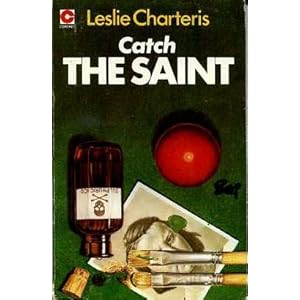
Leslie Charteris: Catch the Saint (1975)

Edition: Coronet, 1977
Review number: 1063

It is here that Leslie Charteris abandons, explicitly, the idea that Simon Templar's adventures are to be considered contemporary to the time of writing, though there is little in either which dates them to any particular period between the thirties and seventies.

Returning to the past fails to re-invigorate Charteris' writing, unfortunately. The two stories - The Masterpiece Merchant, about a kidnapped painter, and The Adoring Socialite, about a hunt for a hidden crime boss, are among the least imaginative of the whole series. Ideas are re-used from earlier tales, notably The Saint in New York, and even from other sources, one twist coming straight from the film Charade. The writing is competent, and as thrillers the stories work reasonably well; the paucity of original ideas is the only reason for rating them lower than most of Charteris' work.

Friday, 25 January 2002

Kurt Vonnegut: Bagombo Snuff Box (1999)

Edition: Jonathan Cape, 1999
Review number: 1051

Even relative to the generally cavalier attitude to stories of many short story writers at the time, Vonnegut must have been exceptional in his carelessness. In fact, he lost track of where some of his stories had been published, and the ones collected here were tracked down by Peter Reed. Some of the stories published here have been quite extensively rewritten, apparently, and all of them have been lost for over thirty years.

Vonnegut is generally considered a science fiction author, yet only a couple of the twenty four stories in the collection could be classified in this genre. (Fans of his from the genre will probably be rather disappointed by Bagombo Snuff Box as a result.) Most of them are set in midwest America, and the theme that a lot of them have is pretence - particularly maintaining or creating a facade of superiority. People return to their home towns after years away, and try to pass themselves off as more successful than they are. Many are amusing, and all are written in the simple yet effective style typical of Vonnegut's work. He seems to have abandoned short story writing following the collapse of many of the American magazines which published them in the early sixties with less regret than other writers, and the sameness of these stories is perhaps indicative that they were not to be the field in which he would produce his best writing. Bagombo Snuff Box is interesting, but not great.

Tuesday, 15 January 2002

E.L. Doctorow: Lives of the Poets (1984)

Edition: Michael Joseph, 1985 (Buy from Amazon)
Review number: 1039

This collection, one novella and six short stories, is connected because all its contents are written in the first person and read as though they are selections from autobiographies. (The plural is because they are mutually contradictory, even though they share details and anecdotes.)

The title story is the novella, and is a memoir of the New York literary scene, all about the marital difficulties of middle aged couples in the late seventies. The narrator of the story is one of the few who fave remained faithful to their partners though this seems to be more because of his absorption in his hypochondria than for any moral scruples.

Of the other stories, The Waterworks deserves mention because it was later adapted into an episode in the novel of the same name. It is the most individual member of this collection, being the only one with a setting in a past not within living memory. It also seems less real than the other stories, as Doctorow tries out a rather different voice.

The general standard is nevertheless high, as might be expected from Doctorow. He doesn't have so much to say in the short story form, with the result that the collection is a little purposeless; but each story is exquisitely crafted.

Saturday, 12 January 2002

Jack Vance: Fantasms and Magics (1950-61)

Edition: Grafton, 1978
Review number: 1038

What these stories, one novella and several shorter tales, have in common is an interest in the use of fantasy ideas in settings more commonly seen in science fiction. One is a Dying Earth story, appearing in that collection as well. The others have wide ranging settings, even if Guyal of Sfere is not the only story set towards the end of Earth's history. Vance's style, where things are not quite what they seem to be in a baroque world, is another constant; it is at its best in The New Prime.

The longer story, The Miracle Workers, is about the relationship between magic and science. The descendants of starship captains stranded centuries ago, the lords of the planet Pangborn utilise magic as a matter of course, while the surviving technology of their ancestors is the almost completely incomprehensible object of superstition.

The stories in Fantasms and Magics live up to Vance's inventive and well written standard and it would, as a collection, make a good introduction to his bizarre universes.

Tuesday, 20 November 2001

Michael Moorcock: London Bone (2001)

Edition: Scribner, 2001
Review number: 995

In Moorcock's earlier short story collection, The Opium General, the title story was by no means the lengthiest item. The same is true here, but London Bone dominates the collection (in terms of quality and memorability) and deserves to provide the title. (There is also a marketing reason for using it as the title, which is the connection it establishes with Mother London, one of Moorcock's best and most successful novels.)

The story London Bone is set in a near future, and is narrated by a speculator who finances West End shows, temporarily suffering a setback because of a collapse in the popularity of Andrew Lloyd Webber. He becomes involved in a new venture, the supply of an incredibly beautiful material initially thought to be mammoth bone from a London building site. It is eventually shown to be human bone, transformed by lime, London clay, and seepages of raw sewage. The story is about the effect that the nostalgia trade has on London, as it cannibalises its past, selling the bones of its ancestors and destroying the soul of the city. It is a powerful and memorable story.

The long story in the collection, The Cairene Purse, is set in Egypt, again in the fairly near future. A western engineer is searching for his sister in Aswan, on a Nile virtually abandoned by tourists because of pollution, the destruction of most of the monuments and their replacement by Disney-built replicas at desert resorts far from the impoverished mass of the Egyptian population. Atmospheric and thought provoking, it is nonetheless not as significant a story as London Bone, perhaps partly because of the length, which feels a touch over extended for the story's ideas.

The Cairene Purse is an odd one out in the collection, for even though not all the other stories are set in London (Doves in the Circle is in New York), they share a metropolitan background which is as well realised as the fantasy backgrounds which were the staple of Moorcock's earlier career. The stories also share a nostalgia for an earlier age, particularly London before or just after the war and certainly before Thatcher, a politician viewed by Moorcock as the destroyer of the essence of her country. Typically for Moorcock, cross references to his other stories abound, characters such as the Cornelius brothers frequently being mentioned in passing.

The best of the stories not yet mentioned is the second, whose title, London Blood, makes it a companion to London Bone. This story, an anecdote of pre war South London, is the most like the novel Mother London. There is really, though, no great connection between these stories and the novel, and London Bone

Wednesday, 24 October 2001

Leslie Charteris: The Saint in the Sun (1964)

Edition: Hodder & Stoughton, 1966
Review number: 971

This early sixties collection includes stories from the preceding decade, several of which were turned into scenarios for the TV series. One is set in the Bahamas, and in the TV series a gloomy Brands Hatch (I think) stood in for a race track at Nassau, cheaper but not nearly so glamorous, and that is possibly the most interesting thing to say about these stories.

Saturday, 6 October 2001

Leslie Charteris: Trust the Saint (1962)

Edition: Hodder & Stoughton, 1964 (Buy from Amazon)
Review number: 957

Six Saint stories from the early sixties, as the date approached the launch of the TV series. Indeed, the final story is one which I remember seeing Roger Moore in, memorable because it is a silly tale about the search for the Loch Ness Monster.

Apart from this, Trust the Saint is one of the least memorable of all the collections of Saint stories. The tales are enjoyable enough when read, but quickly fade from the mind.

Friday, 5 October 2001

Saki: The Square Egg (1924)

Edition: Penguin, 1982
Review number: 955

The second collection of Saki's writing published in the decade after his death is very short; it contains just five or six pieces. The majority are more journalism than storytelling, on subjects such as the way that the Western Front affected the behaviour of birds or on British politics. The pieces about the front - the one just mentioned and The Square Egg itself, about a con man preying on soldiers just behind the lines - are most memorable, but the collection is generally not as interesting as Saki's others. This is because the writing has dated more rapidly, as it requires knowledge of events now obscure, a fault shared with his other brief political satire, Alice in Westminster.

Thursday, 6 September 2001

Saki: The Toys of Peace (1923)

Edition: Penguin, 1982
Review number:936

The first of two collections of Saki stories published after his death in the First World War, stories originally printed beforehand, was given a bitter title, an indication of how remote the world chronicled by Monro seemed even ten years later. (The other, The Square Egg, contains stories written during the War.)

As far as the stories themselves are concerned, they are generally poorer in quality than those collected in Monro's lifetime. The edge is missing, particularly in the eerie supernatural themes which run through much of the fiction. On the other hand, there are some excellent stories here, and both the merciless dissection of the stupidities of society and the evocation of the savagery that children sometimes have is present.

Standout stories include Morleva, about a doll, and Shock Tactics, about a young man whose mother still reads his letters, severely cramping his social life.

Thursday, 30 August 2001

Leslie Charteris: Thanks to the Saint (1958)

Edition: Coronet, 1961
Review number: 928

In this late fifties collection of six stories, Simon Templar returns to the America that has really been his home for the preceding twenty years. It is not one of the more interesting collections, though it does have an unusually high proportion of tales where the Saint is investigating a murder. The reluctance with which he does this is something of a running joke throughout the entire series of stories, objecting on the grounds that he is an action hero rather than Sherlock Holmes, but he does usually take on the role reasonably competently. (The motive for doing so is normally that the police automatically assume that he is responsible for any crime committed while he is in the neighbourhood, so he is working to clear his name. In these stories, this isn't the case, for some reason, but the reluctance is still there.)